


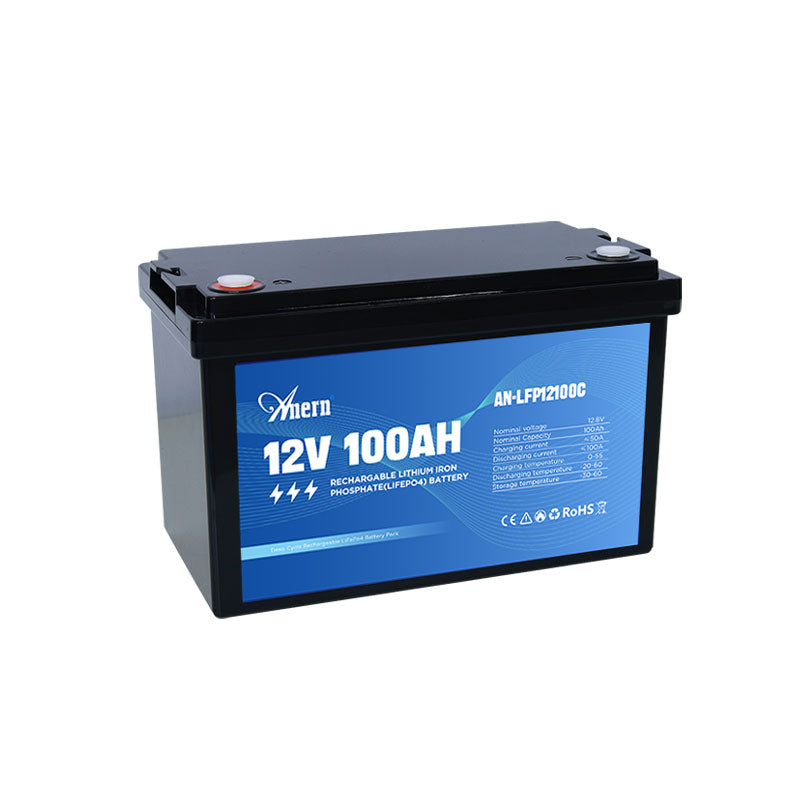



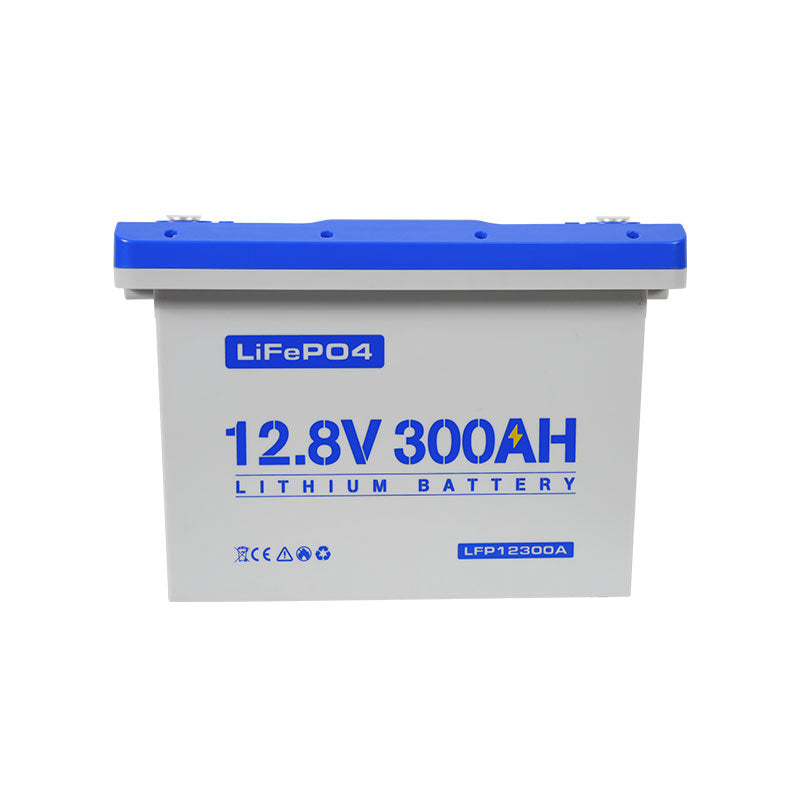









When you buy a 12V 100Ah LiFePO4 battery, the advertised cycle count is only part of the lifespan story. Real-world durability depends on depth of discharge, temperature, charge settings, discharge current, storage habits, and the quality of the Battery Management System (BMS).
With proper care, many LiFePO4 batteries can serve for years in solar, RV, marine, cabin, and backup power systems. The goal is to understand what the cycle number means and how daily use changes it.
Understanding Lifespan: Cycles vs. Calendar Years
Battery life is usually discussed in two ways: cycle life and calendar life. They are related, but they are not the same thing.
The Story Behind Cycle Count
Cycle count describes how many charge and discharge cycles a battery can complete before its capacity falls to a defined end-of-life level, often 70% to 80% of original capacity. LiFePO4 chemistry is known for strong durability, but published cycle numbers depend on test conditions such as temperature, depth of discharge, and charge/discharge current.
This is why two batteries with similar capacity can perform differently in the field. A well-managed 12V 100Ah LiFePO4 battery used gently will usually age more slowly than the same battery pushed to its limits every day.
Defining a Cycle in Practice
A cycle does not always mean 100% discharge followed by 100% recharge. If you use 40% of the battery today and 60% tomorrow, that roughly adds up to one full equivalent cycle. Partial cycles are generally less stressful than deep daily discharge.
Calendar Aging: The Unseen Factor
Calendar aging happens even when the battery is not used. Internal materials slowly change over time. High temperature and long periods at 100% state of charge can speed up this process. For occasional-use systems, calendar aging may matter more than cycle count.
Key Factors That Dictate Real-World Durability
Your operating habits have a direct effect on how long a 12V 100Ah LiFePO4 battery lasts. Most users can extend lifespan by managing a few practical variables.
Depth of Discharge (DoD)
Depth of Discharge is the percentage of capacity used before recharging. Shallower discharge usually means longer cycle life. This does not mean you can never use most of the battery; it means daily deep discharge will age the pack faster than moderate cycling.
| Typical Use Pattern | Battery Stress | Practical Note |
|---|---|---|
| 30% to 50% DoD | Lower | Good for daily solar or backup cycling when capacity allows. |
| 70% to 80% DoD | Moderate | Common in compact systems where battery capacity is limited. |
| Near 100% DoD | Higher | Useful when needed, but not ideal as a daily habit. |
Operating Temperature
Temperature is one of the biggest lifespan factors. Heat accelerates aging, while cold reduces usable capacity and makes charging more restrictive. Standard charging below 0°C (32°F) is generally not recommended unless the battery has low-temperature charging protection or self-heating. For a deeper explanation, review this LiFePO4 battery temperature range guide.
The National Renewable Energy Laboratory has documented how temperature affects battery degradation in energy storage applications. The practical takeaway is simple: keep batteries away from excessive heat whenever possible.
Charge and Discharge Rates (C-Rate)
C-rate describes how quickly the battery is charged or discharged relative to its capacity. For a 100Ah battery, 0.5C equals 50A and 1C equals 100A. Many LiFePO4 batteries can handle strong current, but routine high-current use creates more heat and stress. For daily operation, staying within the manufacturer's recommended current limits is more important than charging as fast as possible.
The Role of the Battery Management System (BMS)
The BMS is the protection and monitoring layer inside the battery. It helps keep cells within safe voltage, current, and temperature limits.
The Guardian of Your Battery
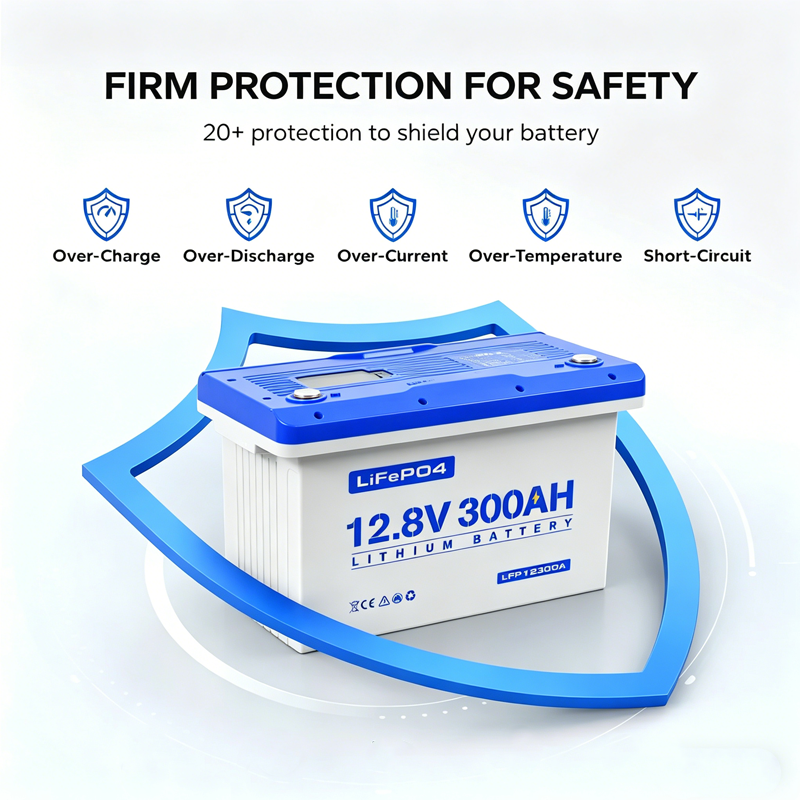
A BMS can protect against overcharge, over-discharge, over-current, short circuit, and unsafe temperature. It can also shut down output if the system is pushed beyond limits. If BMS trips happen often, the system design should be reviewed rather than treating the shutdown as normal operation.
How Cell Balancing Extends Lifespan
A 12V LiFePO4 pack contains multiple cells in series. Over time, small voltage differences can develop between cells. Cell balancing helps keep the pack usable by preventing one cell from reaching a limit too early. This supports more consistent capacity and reduces cell-level stress.
Translating Cycles into Years: A Practical Calculation
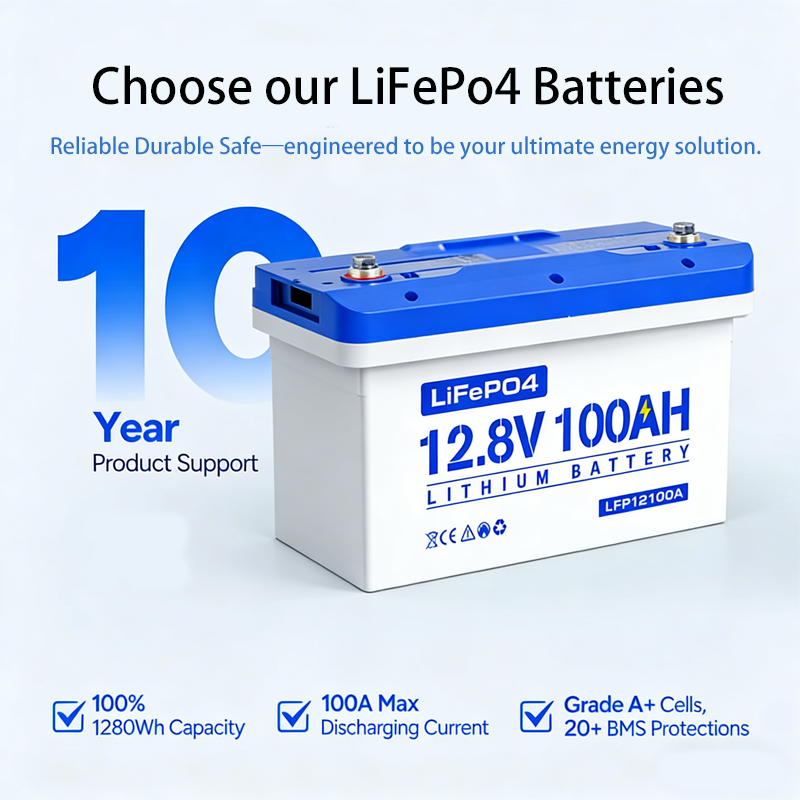
A 12V 100Ah LiFePO4 battery stores roughly 1280Wh, or 1.28kWh, before conversion losses. How long it lasts depends on how much of that energy you use each day.
Scenario 1: Off-Grid Daily Use
If a cabin uses about 1000Wh per day from one 12V 100Ah battery, that is a deep daily cycle. The battery may still last for many years, but depth of discharge, inverter efficiency, temperature, and charge settings become very important. For daily use, adding capacity can reduce stress and extend service life.
Scenario 2: Weekend RV Use
If an RV uses the battery only on weekends or seasonal trips, the pack may complete far fewer cycles each year. In that case, calendar aging and storage habits become more important. Store the battery partially charged, disconnect parasitic loads, and avoid hot storage compartments.
A Final Perspective
The advertised cycle life of a 12V 100Ah LiFePO4 battery is a starting point, not a help support. Real lifespan depends on how the battery is charged, discharged, cooled, stored, and protected. For most users, the best habits are simple: avoid routine deep discharge, keep the battery out of excessive heat, use a proper LiFePO4 charger, and respect BMS current and temperature limits.
For broader system planning, this solar storage performance guide explains how capacity, cycle life, efficiency, and system design work together.
Frequently Asked Questions
How many years does a 12V 100Ah LiFePO4 battery last?
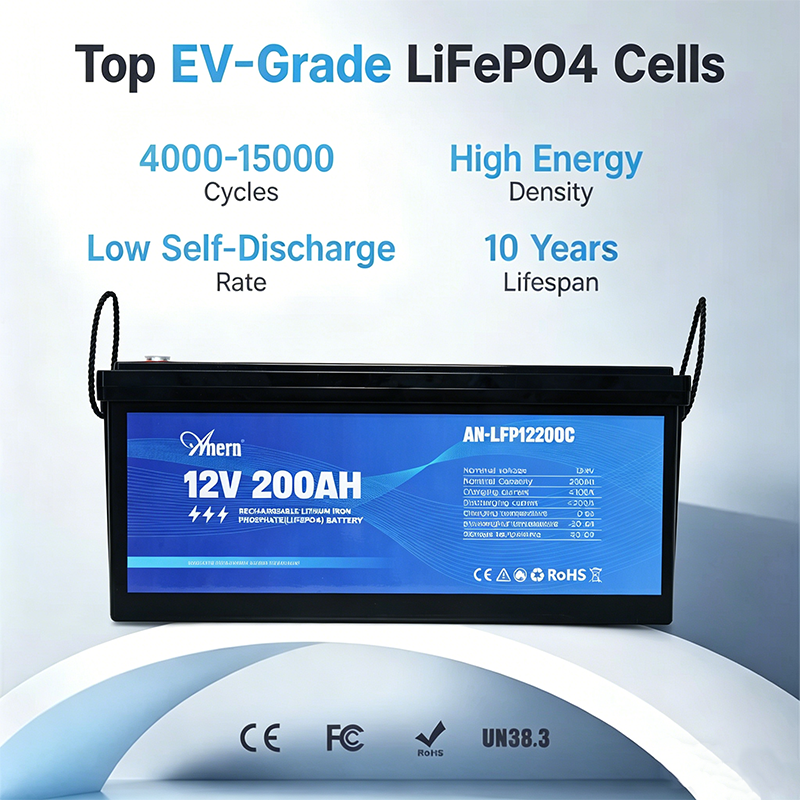
Many well-managed LiFePO4 batteries can last for years in solar, RV, and backup systems. A common expectation is roughly 10 years or more, but actual life depends on temperature, depth of discharge, current, storage habits, and battery quality.
Does leaving a LiFePO4 battery on a charger shorten its life?
It depends on the charger. A compatible LiFePO4 charger should stop or enter an appropriate lithium standby mode after charging. A lead-acid trickle or float charger is not appropriate for many LiFePO4 batteries.
What is the difference between lifespan and cycle life?
Cycle life measures charge/discharge use. Lifespan includes both cycling and calendar aging over time. A lightly used battery can still age after many years even if it has not used up its cycle count.
How can I make a 12V 100Ah LiFePO4 battery last longer?
Use a proper LiFePO4 charger, avoid charging below freezing, reduce exposure to high heat, avoid unnecessary deep daily discharge, and keep loads within the battery's BMS current limits.
