

ENERGY / 01
View battery range LiFePO4 Battery
Stores energy using scalable lithium iron phosphate battery modules.
Commercial & industrial storage
Anern integrates LiFePO4 battery storage, power conversion, battery management, energy management, thermal control and system protection into a coordinated ESS platform—helping EPC contractors and commercial energy users simplify system design, installation and operation.
01 / System architecture
An all-in-one ESS combines the major subsystems required for battery energy storage into a coordinated solution rather than requiring EPC teams to independently source and integrate multiple components.
Depending on the selected configuration, an integrated C&I ESS can include LiFePO4 battery modules, BMS, PCS or hybrid inverter, EMS, thermal management, electrical protection and fire-safety functions.
For commercial projects, the primary advantage is not simply a smaller enclosure—it is reduced system-integration complexity.
Stores energy using scalable lithium iron phosphate battery modules.
Monitors voltage, current, temperature, SOC and battery protection limits.
Controls bidirectional AC/DC power conversion between battery, grid and loads.
Coordinates charging, discharging and operating strategies according to project requirements.
Supports stable battery operating conditions and system-level protection.
02 / Integration efficiency
For EPC contractors, the value of an all-in-one ESS is primarily integration efficiency. Fewer interfaces between independently sourced batteries, PCS, EMS and protection equipment can make design validation, installation, commissioning and after-sales troubleshooting easier to manage.
| Consideration | All-in-One ESS | Conventional Split System |
|---|---|---|
| Component Integration | Pre-integrated system architecture | Multiple independently selected components |
| Engineering | Lower interface complexity | Greater EPC integration workload |
| Installation | More standardized | More site wiring and commissioning |
| Footprint | Compact cabinet-based deployment | Multiple cabinets/equipment zones |
| Communication | Coordinated BMS/PCS/EMS interfaces | Communication matching required |
| Expansion | Modular cabinet expansion | Project-specific redesign may be required |
| O&M | Centralized monitoring | Multiple devices/platforms may be involved |
03 / Operating modes
Charge batteries during lower-demand periods and discharge when facility demand approaches predetermined limits.
Move electricity consumption from higher-tariff periods to lower-cost periods where the local tariff structure supports time-of-use optimization.
Store excess photovoltaic generation for use when on-site solar output is insufficient.
Support selected critical loads during grid interruptions when the system configuration, transfer architecture and inverter operating mode are designed for backup operation.
04 / Project sizing
Four Inputs Determine the Right ESS Configuration
What is the maximum load or PCS output required?
How many kilowatt-hours must be shifted, stored or backed up?
Peak shaving, PV self-consumption, backup, TOU arbitrage or hybrid operation?
Grid voltage, phase configuration, available installation area, ambient conditions and interconnection requirements.
System / Typical Project Positioning
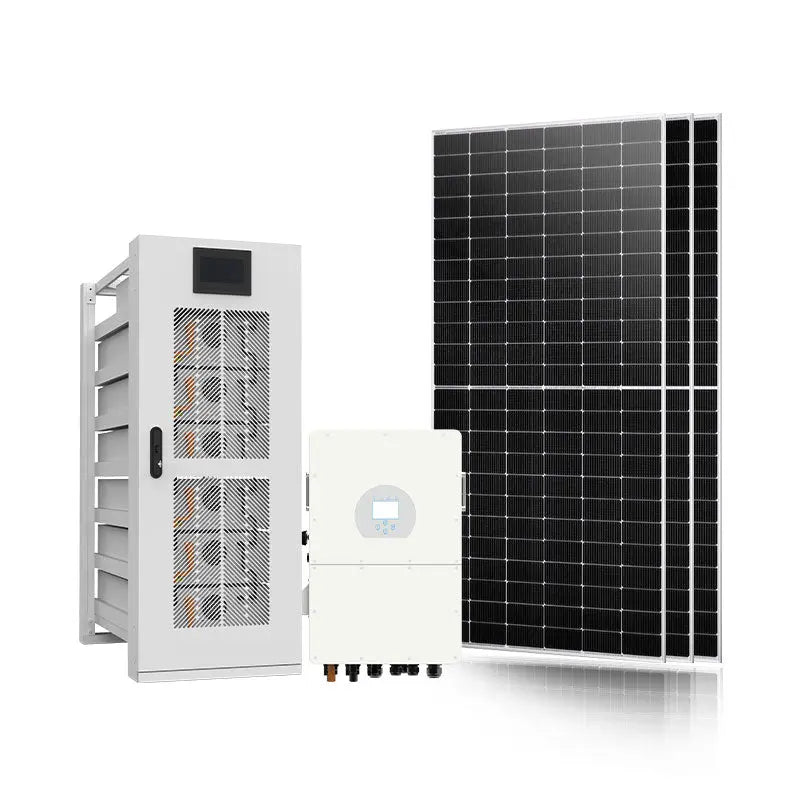
A compact project starting point for commercial sites requiring coordinated solar, storage and three-phase hybrid power conversion.
View 30kW / 60kWh system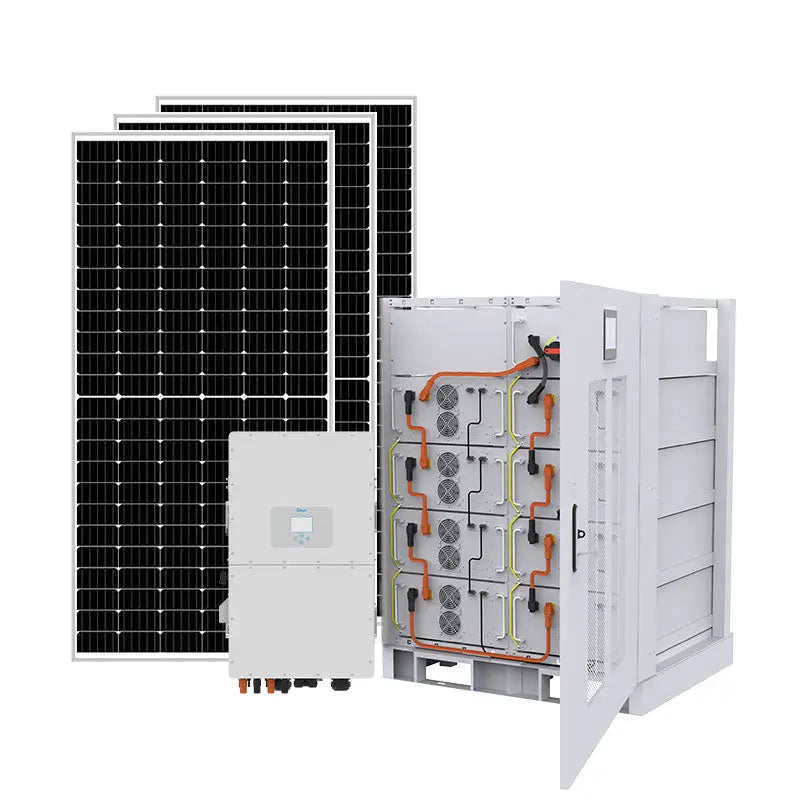
A complete hybrid configuration combining three-phase power conversion, solar generation and 128kWh lithium battery storage.
View 50kW / 128kWh system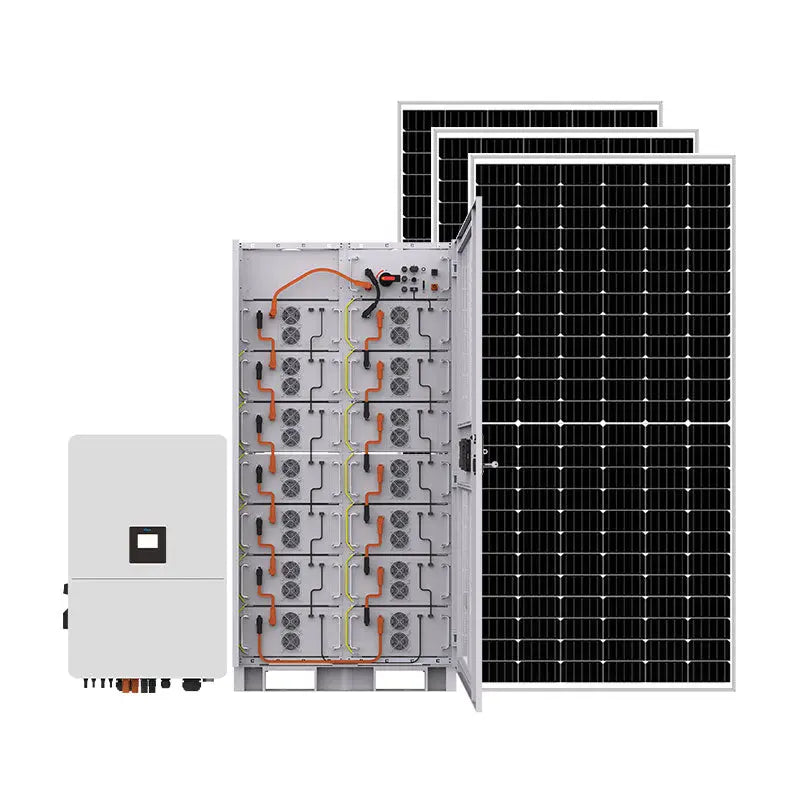
An all-in-one C&I system that pairs an 80kW hybrid inverter with a 225kWh high-voltage LiFePO4 battery bank.
View 80kW / 225kWh system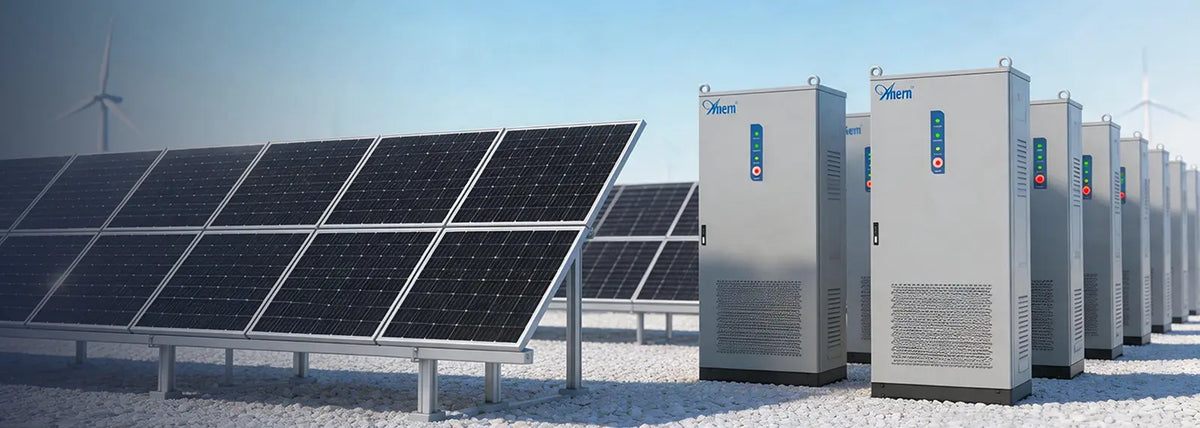
A higher-capacity integrated cabinet platform for industrial parks, commercial centers and solar-storage-charging microgrids.
View 105kW / 241kWh system05 / Market access
Compliance is configuration-specific, not brand-wide.
ESS market access depends on the battery, inverter/PCS, PV module, complete system configuration and destination-country requirements. Anern can provide available certification and technical documentation according to the selected model and project.
| Market | Battery / BESS | PV Module | Inverter / Grid | Manufacturer / Management |
|---|---|---|---|---|
| European Union | IEC 62619 / IEC 63056 where applicable; CE-related requirements | IEC 61215 / IEC 61730 | CE + applicable local grid requirements | ISO 9001; ISO 14001*; ISO 45001* |
| United Kingdom | IEC-based battery safety documentation + applicable UK requirements | IEC 61215 / IEC 61730 | Applicable UK grid connection requirements | ISO management systems |
| United States | UL 9540 / UL 9540A depending on ESS configuration and AHJ requirements | UL/IEC module requirements according to project | Applicable UL / IEEE / utility interconnection requirements | Factory QMS + project documentation |
| Australia / New Zealand | IEC battery safety + local installation requirements | IEC 61215 / IEC 61730 | AS/NZS and local grid connection requirements | Factory QMS |
| Middle East | IEC-based specifications commonly used in tenders | IEC 61215 / IEC 61730 | Utility / tender-specific grid requirements | ISO / project documentation |
| Africa | IEC-based requirements commonly used for international projects | IEC 61215 / IEC 61730 | Country / utility specific | ISO / tender documentation |
| Latin America | IEC-based system documentation + country requirements | IEC 61215 / IEC 61730 | Local utility / grid code requirements | Factory QMS |
Exact certification requirements vary by country, utility, AHJ, system configuration and project. Contact Anern for model-specific certificates and compliance documentation.

06 / Manufacturing depth
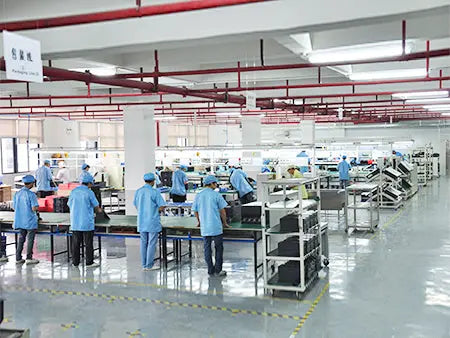
Anern is not positioned simply as a trading company sourcing unrelated components. The company operates a solar manufacturing base of approximately 30,000 m² and is supported by more than 100 R&D professionals.
Its product portfolio covers lithium batteries, solar inverters, photovoltaic modules and integrated solar energy storage solutions, allowing project teams to coordinate multiple key parts of a solar-plus-storage system through one supplier.
07 / Project delivery
Five coordinated steps keep technical inputs, configuration and project documentation aligned.
Country, load profile, PV capacity, grid information and required backup time.
Determine kW/kWh ratio, battery architecture and PCS/inverter configuration.
Match available certificates and documentation against destination-market requirements.
Assembly, inspection and project documentation.
Installation documentation, commissioning guidance and after-sales support.
08 / Technical answers
Confirm model-specific requirements with Anern’s technical team when planning a quotation or market-compliance review.
Ask a technical questionA battery cabinet primarily stores energy. An all-in-one ESS can additionally integrate power conversion, energy management and other balance-of-system functions.
Yes, when properly sized and configured with an EMS, an ESS can charge and discharge according to facility demand thresholds.
Yes. Depending on the AC- or DC-coupled architecture, an ESS can store excess PV generation for later use.
Anern can configure equipment according to project electrical requirements and provide available model-specific certification documentation. Final market-access requirements should be verified for the destination country and project.
Country, load profile, required power, required storage duration, PV capacity, grid voltage/frequency, installation environment and required operating modes.