
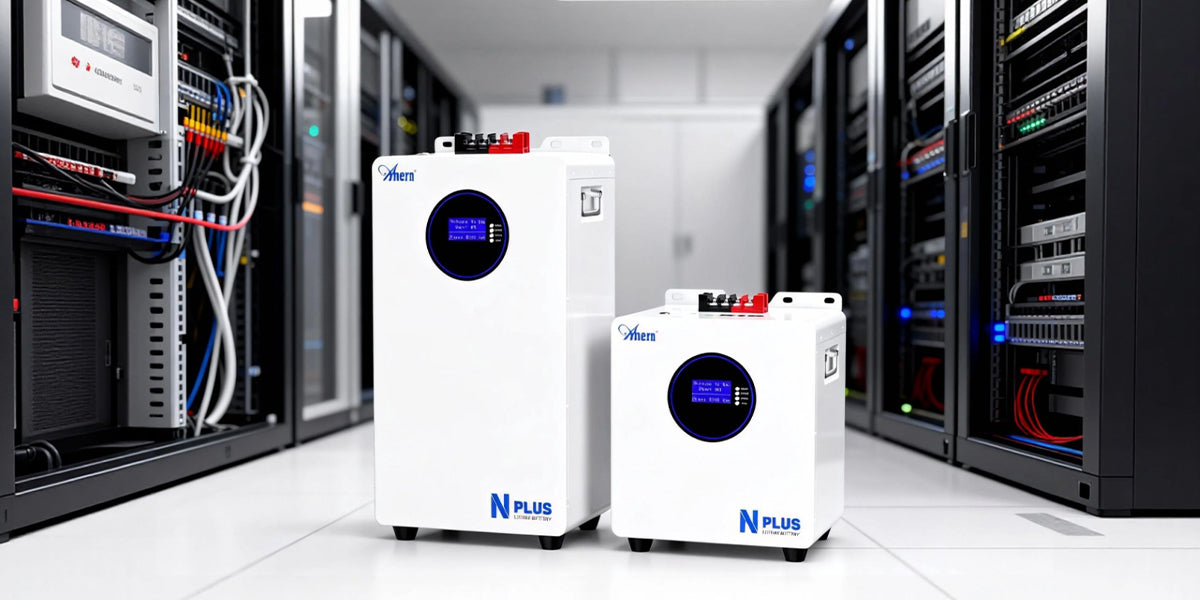
Backup power issues in telecom sites and data centers often surface at the worst time. A short utility event, a weak battery string, or slow recovery can cascade into service risk. Operators also face tighter staffing and more distributed footprints, especially with edge rooms and network closets. In this environment, a 48V lithium-ion battery has become a practical standard. It aligns with established 48V-class DC ecosystems while improving monitoring, predictability, and recovery for critical loads.
Benefits of 48V DC Power Systems in Telecom Networks
Telecom power has a long memory. The 48V-class DC architecture earned its place because it works across thousands of sites and many generations of equipment. It supports consistent design rules and repeatable service routines.
This matters in the field. Technicians rotate across regions. Spare strategies must stay simple. A common voltage class reduces training overhead and speeds diagnosis during outages.
Operational Advantages That Scale
The most meaningful benefits of 48V DC power systems in telecom networks include:
- Wide compatibility with rectifiers, distribution panels, and DC loads
- Straightforward battery string sizing
- Safer handling in routine service compared with higher-voltage DC classes
- Efficient distribution for common cabinet and shelter layouts
- Easier fleet-level standardization across urban and remote sites
As networks expand into edge hubs and small cell support rooms, these advantages keep design fragmentation under control.
How 48V Lithium Ion Batteries Match -48V Telecom Power Architecture
Many telecom documents reference 48V. The naming convention reflects historical grounding practices. The daily engineering reality is simpler. Modern 48V battery systems are designed for the same operating environment.
A 48V lithium-ion battery typically fits existing DC plants through compatible voltage windows and coordinated protections. The integration focus should stay on rectifier settings, charge profiles, and alarm pathways.
Voltage Windows and System Harmony
Telecom DC plants operate within defined ranges for float, charge, and discharge. A well-specified lithium system is built to respect those ranges. This helps protect both the battery and the load.
The BMS as an Operations Tool
The battery management system is a major reason lithium adoption has accelerated. It supports:
- Cell balancing for stable long-term performance
- Overcurrent and overtemperature safeguards
- Clear state-of-charge and state-of-health reporting
- Remote alarms that integrate into site monitoring
These features reduce uncertainty during audits and maintenance planning. They also improve confidence in runtime assumptions during real events.
48V Lithium-Ion vs VRLA for Data Centers: A Practical Decision Framework
Data centers need backup that behaves predictably under pressure. The decision between lithium and VRLA often comes down to operational fit.
VRLA stands for valve-regulated lead-acid. It remains common and proven. Yet many operators now reassess it as footprints spread and staffing models tighten. The comparison of lithium-ion vs VRLA for data centers has become a routine planning topic in both core and edge environments.
A Quick Side-by-Side View
| Decision Area | VRLA Reality in Many Sites | 48V Lithium Reality in Many Sites |
| Routine Attention | More frequent testing and replacement coordination | Lower routine intervention with richer monitoring |
| Visibility | Limited health insights without added tools | Strong BMS telemetry and clearer trends |
| Space and Weight | Larger footprint for similar usable capacity | Higher energy density supports compact rooms |
| Recovery After Discharge | Slower recharge patterns in many deployments | Faster recharge supports resilience turnaround |
| Fleet Standardization | More site-by-site variation over time | More consistent behavior with aligned settings |
This framework avoids absolute claims. Site context still matters. Temperature conditions, runtime targets, and service models will shape the final choice.
What Makes 48V Lithium Ion Batteries a Strong Fit for Data Center Backup Power
Data centers face rapid change. Load densities increase. Expansion timelines compress. Edge sites multiply. These pressures raise the value of batteries that simplify operations.
A 48V lithium-ion battery supports modern data center backup power needs through compact design and strong system intelligence. It also aligns well with DC sub-systems that remain common in many facilities.

Reliability and Recovery in Daily Operations
Operators often value:
- Faster restoration of backup readiness after a discharge
- More predictable capacity behavior across the battery’s service life
- Better alignment with remote monitoring workflows
- Reduced on-site testing pressure in distributed portfolios
This combination is especially relevant for micro data centers, enterprise edge rooms, and regional facilities without full-time power staff.
Planning Benefits for Mixed Fleets
Many organizations manage both legacy rooms and newer edge nodes. A common 48V-class approach can reduce complexity across that mix. It simplifies spare planning and helps standardize operating procedures.
UPS Battery Replacement for Network Closet: Why 48V Lithium Ion Matters
Network closets often sit outside the spotlight. They still support critical switching, routing, security, and building systems. A weak battery strategy here can cause outsized disruption.
For teams planning UPS battery replacement for network closet environments, a 48V lithium-ion battery can offer a cleaner path to standardization. The benefit is practical. It reduces the need for frequent site visits and improves visibility across many small locations.
A Low-Surprise Replacement Checklist
Confirm these items before deployment:
- Electrical compatibility with the UPS and its charging profile
- Measured load draw during normal and peak conditions
- Physical fit, ventilation, and cable routing
- Remote monitoring requirements for IT operations
- Seasonal temperature patterns in each closet
This checklist supports a disciplined rollout. It also helps align IT and facilities teams on realistic runtime goals.
48V Lithium Ion Batteries as the Modern Backup Default
Telecom and data center teams prioritize architectures that reduce uncertainty. A 48V lithium-ion battery supports that goal by fitting long-established DC systems while delivering stronger health visibility and smoother lifecycle planning. It also suits modern realities such as tighter spaces, faster expansion, and fewer maintenance windows. For fleets that span telecom rooms, edge data centers, and network closets, 48V lithium helps standardize backup strategy without adding operational complexity. The result is a more predictable resilience model for critical infrastructure.
FAQs
Q1. Do 48V lithium systems require different charging settings than VRLA?
Yes. A 48V lithium-ion battery typically uses a tighter, BMS-governed charge profile. Existing rectifiers may need adjusted float and charge parameters. Confirm the allowable voltage window, current limits, and alarm mapping to avoid nuisance faults or shortened battery life.
Q2. How do cold or hot sites change 48V lithium backup performance?
Temperature strongly affects charging behavior. Many lithium systems limit charging in very low temperatures to protect cells. Outdoor telecom shelters may need insulation, cabinet heating, or low-temperature-rated battery options. Hot rooms benefit from airflow planning and continuous health telemetry.
Q3. Which certifications are most relevant for telecom and data center deployments?
Look for recognized safety and transport compliance. Stationary battery safety listings and documented test reports help with inspections. For shipments, UN 38.3 is commonly required. Some telecom central office environments may also expect NEBS-aligned equipment practices.
Q4. Can existing battery cabinets, breakers, and cables be reused?
Often yes, but verify details. Check mechanical fit, terminal type, lug size, cable insulation rating, and breaker/fuse coordination. Lithium systems can deliver high current during short events, so confirm that distribution hardware and protection settings match the new fault and discharge profiles.
Q5. What should I plan for the end-of-life handling of 48V lithium batteries?
Build a lifecycle plan early. Many operators use vendor take-back programs or certified recycling partners. Keep documentation on installation dates, health reports, and removal procedures. Clear chain-of-custody reduces compliance risk and simplifies budgeting for future refresh cycles.
