





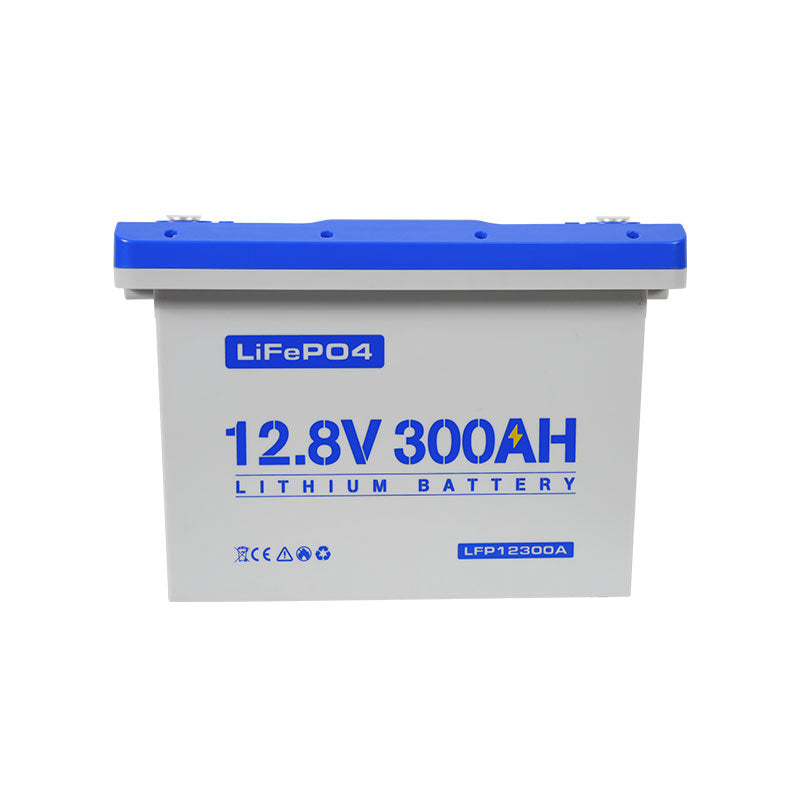
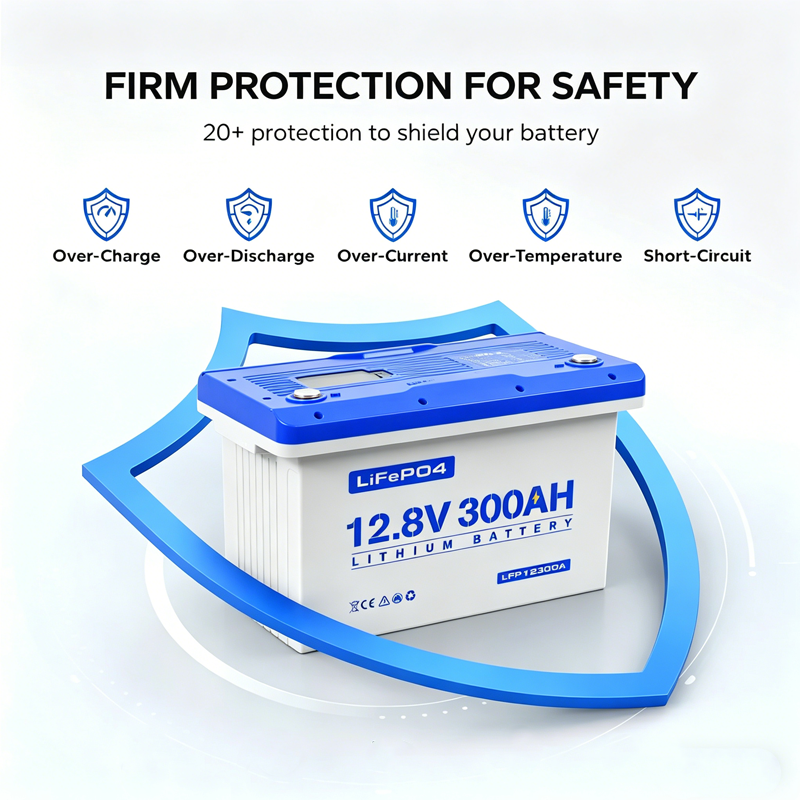








Getting the charging voltage right for a LiFePO4 battery is central to safety, usable capacity, and long service life. Unlike lead-acid batteries, LiFePO4 batteries need a charging profile that matches their chemistry. The correct settings help the battery charge efficiently without forcing the cells into unnecessary stress.
Understanding LiFePO4 Charging Fundamentals
LiFePO4 charging is usually simple when the charger, solar charge controller, or inverter-charger has the right lithium profile. Problems start when users apply lead-acid presets, enable equalization, or set voltage too high.
The Two-Stage Charging Process: CC/CV
The common charging method for LiFePO4 batteries is Constant Current/Constant Voltage, often written as CC/CV.
- Constant Current (CC): The charger supplies steady current while battery voltage rises.
- Constant Voltage (CV): The charger holds the target voltage while current tapers down.
This method charges the battery efficiently without the equalization stage used by some lead-acid chargers. For more common charging errors, see this guide to LiFePO4 charging mistakes.
Key Voltage Terminology Explained
- Bulk or absorption voltage: The main target voltage during the CV phase.
- Float voltage: A standby voltage. Traditional lead-acid float behavior is usually not needed for LiFePO4.
- Low-voltage cutoff: A protective limit that prevents the battery from being over-discharged.
- Over-voltage protection: A BMS function that disconnects charging if a cell rises too high.
Pinpointing the Optimal Charging Voltage
The right voltage depends on the number of cells in series and the battery manufacturer's specification. The values below are common planning ranges, not a substitute for the battery manual.
Recommended Voltage Settings Per Cell
Many LiFePO4 cells are charged near 3.60V to 3.65V per cell at the top of charge. Charging beyond the recommended range adds little practical capacity and can increase cell stress. Charging slightly lower can reduce stress for users who prioritize cycle life over maximum single-cycle capacity.
Calculating Voltage for Your Battery Pack
| Battery System | Cell Configuration | Common Absorption Range | Common Standby/Float Range |
|---|---|---|---|
| 12V | 4S | 14.2V to 14.6V | 13.5V to 13.8V |
| 24V | 8S | 28.4V to 29.2V | 27.0V to 27.6V |
| 48V | 16S | 56.8V to 58.4V | 54.0V to 55.2V |
For example, a 12V LiFePO4 battery normally uses four cells in series. A 3.65V per-cell top charge equals 14.6V for the full pack. Some users choose a slightly lower absorption setting, such as about 14.2V to 14.4V, to reduce time spent at the top of charge.
The Role of Temperature Compensation
LiFePO4 batteries do not use lead-acid-style temperature compensation in the same way, but temperature still matters. Standard charging below 0°C (32°F) is generally not recommended because it can cause lithium plating. The battery should have low-temperature charging protection if it will be charged in cold environments. This LiFePO4 battery temperature range guide explains the cold-weather limits in more detail.
The Battery Management System (BMS): Your System's Guardian
The BMS monitors individual cells and protects the battery from conditions that could shorten life or create safety risk. It is essential, but it should not be treated as a substitute for correct charger settings.
How a BMS Protects Against Voltage Issues
The BMS can disconnect charging when a cell reaches its over-voltage threshold. It can also disconnect loads when cell voltage drops too low. These cutoffs protect the pack, but frequent BMS trips usually indicate a setup problem, such as the wrong charger profile, too much load, poor wiring, or cold charging conditions.
Cell Balancing for Optimal Health
Cells in a pack do not age or charge identically. Balancing helps keep cell voltages closer together, improving usable capacity and reducing the chance that one cell reaches a voltage limit before the rest. Many BMS designs balance near the upper part of the charge cycle, which is why an occasional full charge can be useful for some packs.
Practical Application and Advanced Optimization
Correct voltage settings must be applied to every charging source: AC charger, solar charge controller, DC-DC charger, and inverter-charger. One wrong charging source can undo the benefit of the others.
Setting Your Solar Charge Controller
Use a LiFePO4 or custom lithium profile. Disable equalization unless the battery manufacturer explicitly specifies otherwise. Avoid Gel, AGM, flooded, or repair modes. If you are comparing controller types, this MPPT vs PWM LiFePO4 battery guide explains why controller choice affects charging performance.
Integrating with Inverters and Energy Storage Systems
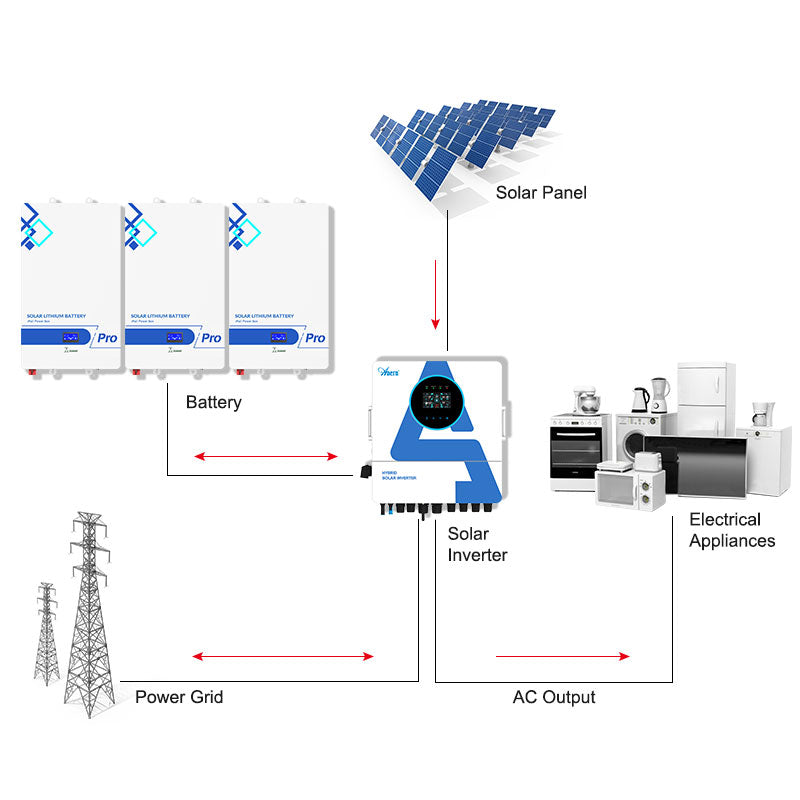
For a solar-plus-storage system, the inverter-charger and charge controller should use compatible settings. The U.S. Department of Energy explains that inverters convert DC electricity into AC power and increasingly support system control functions. In battery systems, correct inverter-charger settings are part of that control layer.
The Impact of Voltage on Long-Term Performance
If your goal is maximum cycle life, charging slightly below the highest allowed voltage can reduce stress while sacrificing only a small amount of usable capacity. If your goal is maximum runtime for backup events, charging closer to the manufacturer's full-charge setting may make sense. The right choice depends on whether daily longevity or maximum stored energy matters more for your system.
A Final Word on Charging Precision
Optimal LiFePO4 charging voltage is not about chasing the highest number. It is about matching the battery specification, using a proper CC/CV lithium profile, avoiding cold charging, and letting the BMS operate as protection rather than routine control. That approach helps your solar energy storage system charge safely and perform reliably over many cycles.
Frequently Asked Questions
What is the maximum charging voltage for a LiFePO4 cell?
Many LiFePO4 cells use a top charging voltage near 3.60V to 3.65V per cell, but the battery manufacturer's specification should be the final reference. Higher voltage usually adds little useful capacity and can increase stress.
Can I use a lead-acid battery charger for my LiFePO4 battery?
It is generally not recommended. Lead-acid chargers may use float, equalization, desulfation, or repair modes that are unsuitable for LiFePO4 chemistry. Use a charger with a LiFePO4 profile or a custom CC/CV profile.
What happens if I consistently undercharge my LiFePO4 battery?
Moderate undercharging is not usually dangerous, but very low charge targets can reduce usable capacity and may prevent some BMS designs from balancing cells effectively. Occasional full charges may be useful when the manufacturer recommends them for balancing.
Does float charging harm a LiFePO4 battery?
Traditional continuous float charging is usually unnecessary for LiFePO4 batteries. If a charger offers a lithium standby or float setting, it should be configured according to the battery manual and should not hold the battery at an excessive voltage for long periods.
