


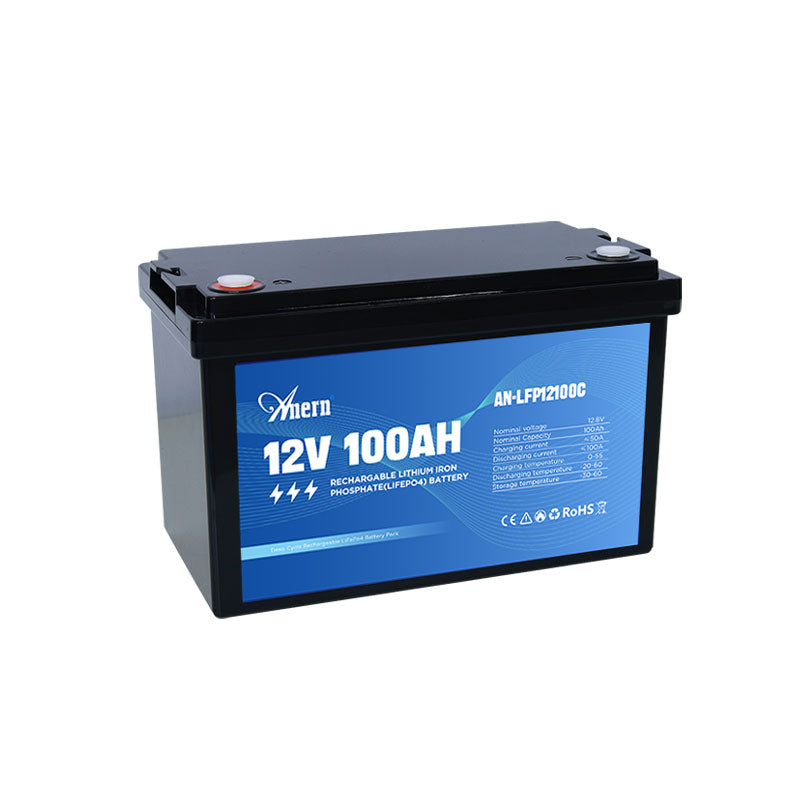

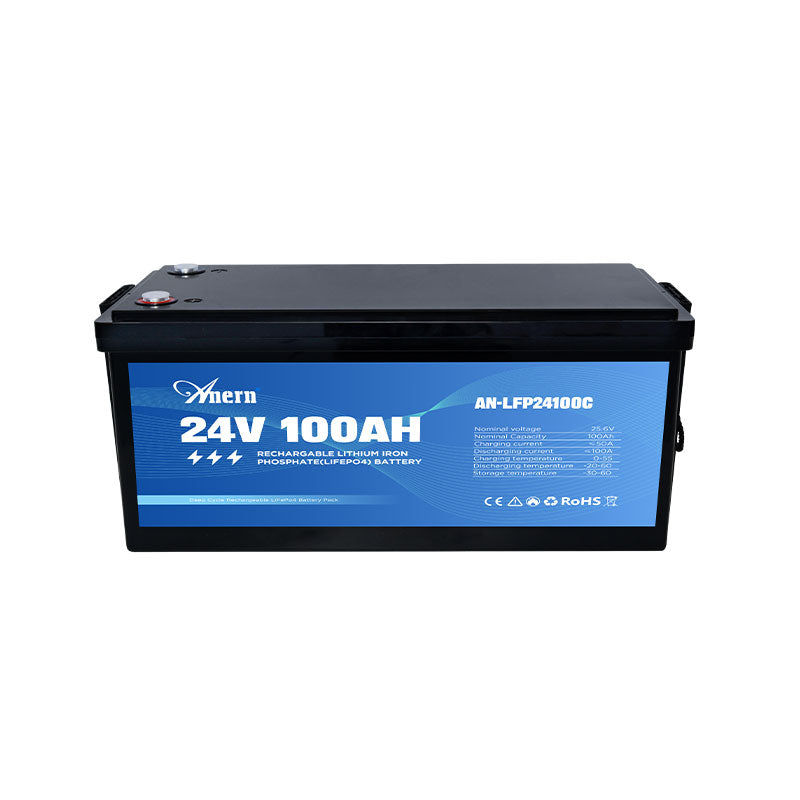
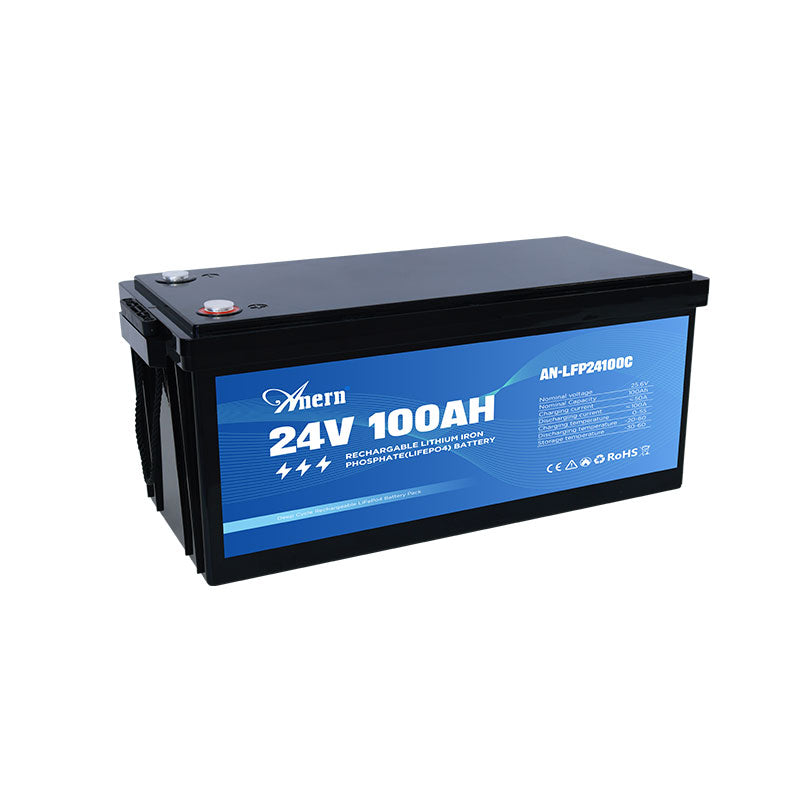

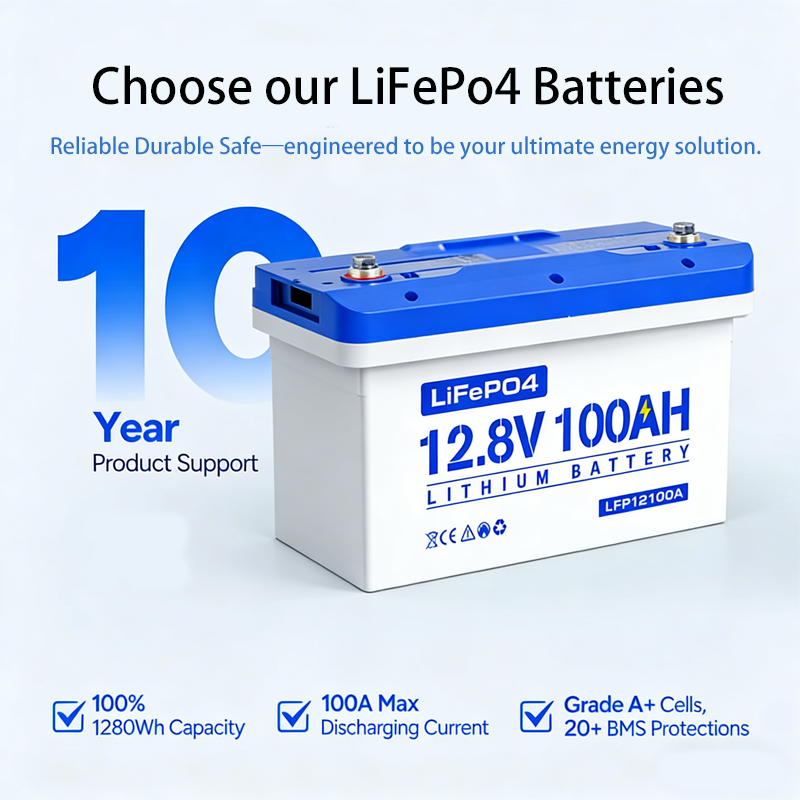

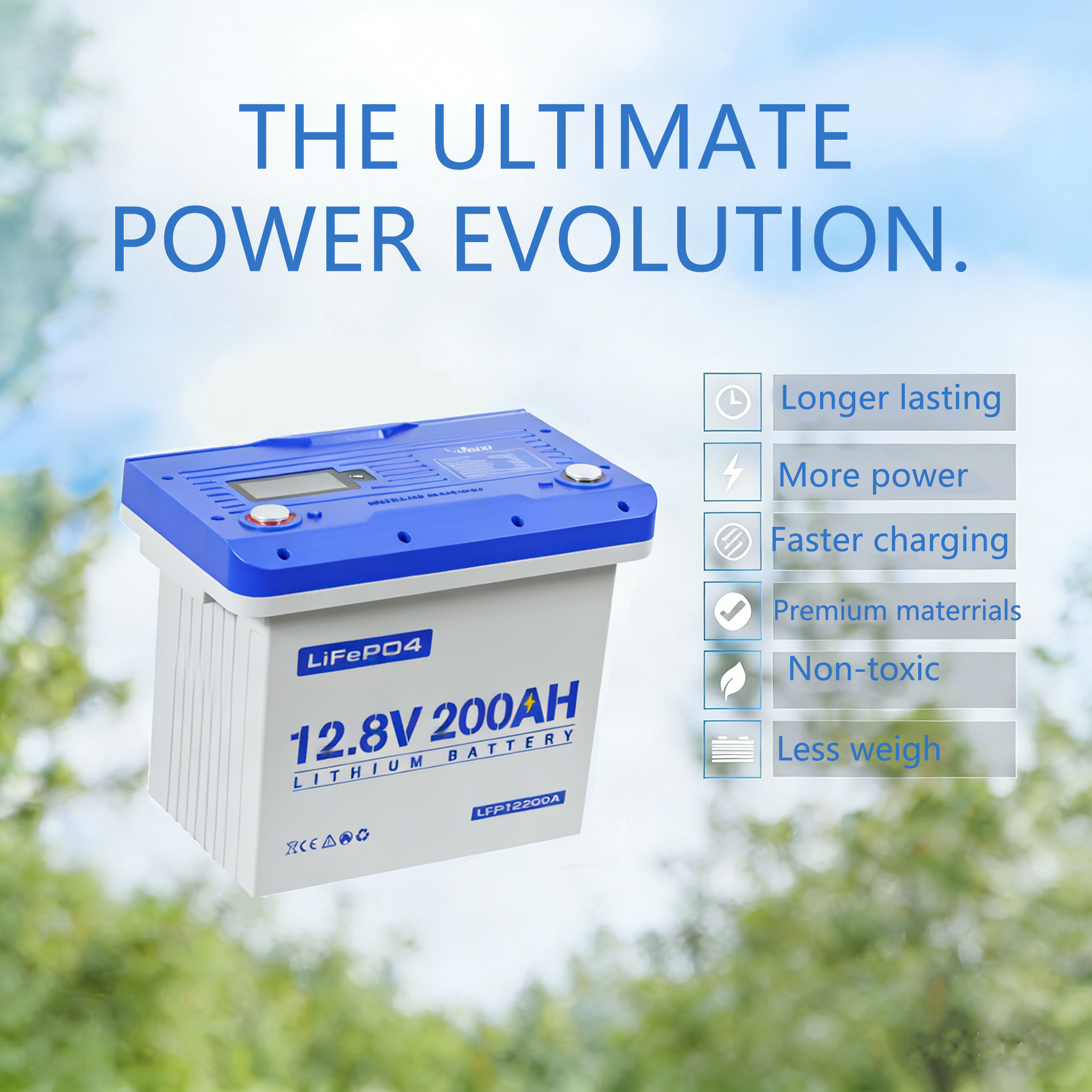








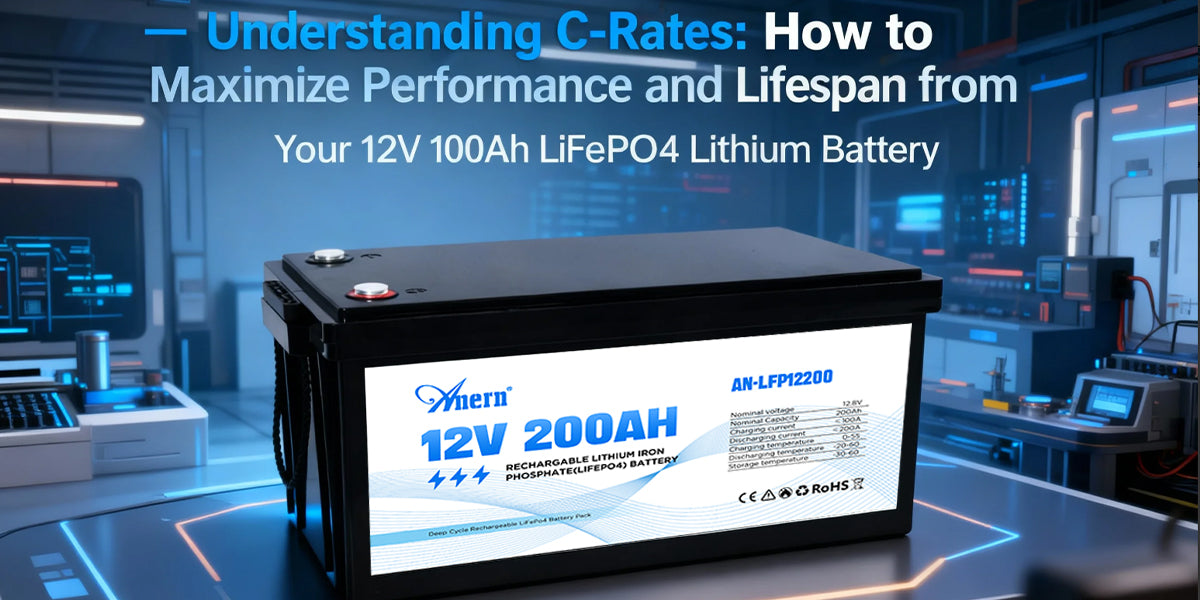
A battery can look perfect on paper and still disappoint in the real world. Most problems manifest in the same way: the inverter shuts off prematurely, voltage drops under load, or the pack overheats. In many systems, the root cause is simple. The battery is being pushed at a C-rate that is too aggressive for daily use. With a 12V 100Ah LiFePO4 lithium battery, a moderate operating pace often delivers the best mix of strong output and long service life.
What Is C-Rate on a 12V 100Ah LiFePO4 Battery?
C-rate turns “battery stress” into a number you can calculate. It tells you how hard your battery is working at any moment.
C-Rate Math You Can Use in 10 Seconds
C-rate is current compared to capacity. For a 12V 100Ah LiFePO4 lithium battery, capacity is 100Ah, so the conversions are easy:
- 1C = 100A
- 0.5C = 50A
- 0.2C = 20A
If your system pulls 50 amps continuously, you are operating at 0.5C.
Why “12V” Often Means 12.8V
Most “12V LiFePO4” batteries use four cells in series. The pack sits around 12.8V nominal in normal operation. Fully charged voltage is commonly set near 14.4V to 14.6V, depending on the charging profile and manufacturer recommendations.
Charge C-Rate and Discharge C-Rate Are Not the Same
Discharge C-rate is driven by your loads. Charge C-rate is driven by your charger or solar controller. They behave differently in daily life.
- Heavy discharge stresses the battery through heat and voltage drop.
- Fast charging can also create heat, especially late in the cycle when the voltage is high.
A smart system treats both as controllable variables, not fixed limits. Always confirm your battery’s max continuous charge and discharge current from the datasheet or the BMS limits.
How Battery Discharge Rate Affects Power, Runtime, and Voltage Drop
High current can make a healthy battery feel weak. This is where many “my battery is bad” stories begin.
Voltage Drop Can End Your Runtime Early
Inverters protect themselves. When battery voltage dips below the cutoff, the inverter shuts down. That can happen even if the battery still has capacity left.
You usually see it as:
- The inverter alarm is sounding under load
- A sudden shutdown when a compressor starts
- A noticeable performance drop when multiple appliances run together
This behavior becomes more likely as the battery discharge rate increases.
Cable gauge, connector quality, and fuse blocks can add resistance and make the voltage drop look worse than it should.
High Discharge Rate Shrinks Usable Energy
At higher currents, the battery loses more energy inside the pack as heat. The usable output drops, and voltage holds up less reliably. Over time, repeated high-rate use can raise internal resistance, which makes the voltage drop worse in future cycles.
A Practical Formula That Prevents Guesswork
Use this quick estimate before you connect a new load:
Amps ≈ Watts ÷ Battery Voltage
For a 12V 100Ah LiFePO4 lithium battery, using 12.8V is a good real-world estimate.
Examples:
- 300W ÷ 12.8V ≈ 23A (about 0.23C)
- 600W ÷ 12.8V ≈ 47A (about 0.5C)
- 1200W ÷ 12.8V ≈ 94A (close to 1C)
That last number is the one to respect. Near 1C, voltage drop and heat become much harder to ignore.
Quick Snapshot Table
| Discharge Rate | Current | What You’ll Notice | Best Fit |
| 0.2C | 20A | Very stable voltage | Lighting, routers, small DC loads |
| 0.5C | 50A | Strong output, good runtime | Fridge, TV, essential AC loads |
| 1C | 100A | Higher heat, bigger dips | Short bursts, high-demand tools |
If your daily routine lives around 0.5C, your battery will usually feel “effortless.” If it lives near 1C, the system needs better planning.
How C-Rate Impacts LiFePO4 Cycle Life and Battery Temperature
This is the part that directly affects longevity. Higher current means higher heat, and heat is the fastest path to long-term wear.

Heat Rises Much Faster Than People Expect
Electrical heating inside a battery grows roughly with the square of the current. That means doubling the current can create far more heat than your instincts suggest.
Here’s the practical implication:
- 0.5C tends to run cooler and steadier
- 1C can push temperatures up quickly, especially in a tight battery box
Once the temperature rises, internal aging reactions accelerate.
Internal Stress Is Not Visible, But It Adds Up
At higher C-rates, the battery experiences stronger polarization and greater internal strain. The battery still works, so the stress is easy to miss. Over many cycles, that stress contributes to faster capacity fade and higher impedance.
This is the real reason “moderate C-rate habits” matter when you want to maximize LiFePO4 lifespan.
High Current Hurts More When the Battery Is Older
A new pack often tolerates heavy loads better. As it ages, internal resistance tends to rise. The same load then produces more voltage drop and more heat. That makes long-term high C-rate operation less forgiving year after year.
Why 0.5C Is a Smart Daily Discharge Rate to Maximize LiFePO4 Lifespan
For most real systems, 0.5C is the sweet spot because it supports useful power without forcing the battery to run hot.
0.5C Often Fits Real Off-Grid Life
A continuous 50A discharge is already a serious output for a 12V system. It covers many common needs:
- A refrigerator is cycling normally
- Lighting and electronics
- Small kitchen devices are used one at a time
- A moderate inverter load that runs for hours
With a 12V 100Ah LiFePO4 lithium battery, 0.5C often keeps voltage stable enough that the inverter stays calm and the battery stays cooler.
1C Has a Place, but It Should Stay Occasional
Some loads demand high current. That includes power tools, pumps, or appliances with large startup surges. A short burst is usually fine.
Problems show up when 1C becomes “normal.” That’s when heat builds, voltage dips deepen, and cycle life starts to compress.
Three Ways to Lower Stress Without Giving Up Capability
If your system regularly pushes close to 1C, you have several clean fixes:
1. Reduce Simultaneous Loads
Run the largest loads one at a time. Even a small scheduling change can cut peak current in half.
2. Add Capacity in Parallel
Two 100Ah batteries in parallel share the load. A 100A draw becomes about 50A per pack. Each battery operates closer to 0.5C.
3. Manage Startup Surges
Motors and compressors pull extra current at startup. Avoid stacking these surges with other heavy loads.
These moves are predictable and measurable. They also improve system stability, not only battery longevity.
What Is the Optimal Charge Rate for LiFePO4 Longevity
Charging strategy can extend life even when discharge habits are already reasonable. Many systems lose their lifespan quietly due to charging heat, long time spent near full voltage, or charging in bad conditions.
A Daily Charge Target That Works in Most Systems
For a 12V 100Ah LiFePO4 lithium battery, a longevity-focused range is usually:
0.2C to 0.5C charging (20A to 50A)
That range tends to charge fast enough for real life, while keeping heat manageable.
If you see 20A in a system description, remember the conversion: 20A equals 0.2C, not 0.5C. It is a gentle charge rate.
Voltage Settings Matter as Much as Current
LiFePO4 charging often uses a constant-current phase and then a constant-voltage phase. Many systems target a top voltage of around 14.4V to 14.6V for a 4S pack. Some setups use a slightly lower top voltage to reduce time spent at a high state of charge, which can be gentler for long-term use patterns.
Two habits support longevity:
- Limit long “full-charge holds” when you do not need them
- Let the current taper near the top rather than forcing a hard finish
Small changes here reduce heat and lower long-term stress.
Cold Charging Is a Real Damage Risk
Avoid charging below 32°F (0°C).
That rule is widely repeated for lithium chemistries because low-temperature charging can cause lithium plating, which permanently reduces capacity and increases internal resistance. If your battery has low-temperature charge protection in the BMS, it is doing important work.
A Simple Charging Checklist
- Aim for 0.2C to 0.5C for daily charging
- Watch for heat buildup in enclosed spaces
- Keep connectors tight to avoid extra resistance
- Let charging taper naturally near the top
These steps help you stay aligned with the optimal charge rate for LiFePO4 longevity.
Conclusion: Simple C-Rate Rules for a Longer-Lasting 12V 100Ah LiFePO4 Battery
A 12V 100Ah LiFePO4 lithium battery lasts longer when the daily current stays moderate. For most systems, keeping continuous discharge around 0.5C helps control heat and voltage drop, which protects cycle life. If your loads often push near 1C, reduce simultaneous demand or add parallel capacity so the battery is not living at its limit. Charge gently when possible, and avoid cold charging. With these habits, your battery stays steady, efficient, and dependable for years.
FAQs
Q1: Can I store a 12V 100Ah LiFePO4 battery fully charged for months?
No. Long-term storage at 100% state of charge can increase calendar aging. For seasonal use, store closer to 40–60% and recharge periodically. A cool, dry place also helps reduce slow capacity loss over time.
Q2: Do I need a special charger for a 12V 100Ah LiFePO4 lithium battery?
Yes. Use a LiFePO4-compatible charger or controller profile with the correct voltage limits and no automatic equalization mode. Lead-acid “desulfation” or equalize cycles can over-voltage lithium packs and trigger BMS protection or premature wear.
Q3: Should I balance LiFePO4 cells regularly to improve lifespan?
Usually no. Most drop-in batteries rely on an internal BMS that balances near the top of charge. Frequent manual balancing is unnecessary unless you see repeated early cutoffs, abnormal voltage spread, or uneven behavior after long storage.
Q4: What is a safe way to estimate the starting surge current for motors on 12V systems?
Yes, you can estimate it. Many small compressors or pump loads draw 2–5× their running current for a brief moment. Verify inverter surge rating and cable sizing, and measure with a clamp meter if surges cause cutoffs.
Q5: Does parallel wiring change how the BMS protects a battery bank?
Yes. Each battery’s BMS still protects its own pack, but current sharing depends on cable length, resistance, and state of charge. Use matched cable sets and connect in a balanced layout to reduce uneven loading and nuisance shutdowns.
