














A single 12V LiFePO4 battery can run small loads without trouble. Real projects rarely stop there. RV owners, boat users, and off-grid homeowners soon want more power or longer runtime. At that point, a simple question comes up: how should several batteries work together so the system stays safe, efficient, and easy to grow later?
The goal here is to give you a clear way to think about voltage, capacity, and wiring choices. Once those basics feel solid, series and parallel connections stop being abstract terms and turn into practical tools you can control.
What Is a 12V LiFePO4 Battery and Why Do Voltage and Capacity Matter?
Many people see "12V LiFePO4" on a label and only check the amp-hours. That habit misses half the story. Voltage and capacity work together and decide what your system can actually do.
Key Terms Around a 12V LiFePO4 Battery
A typical 12V LiFePO4 battery has a nominal voltage around 12.8 V. Three simple values describe it:
- Volts (V): electrical pressure that must match your inverter and DC loads.
- Amp-hours (Ah): how much current the battery can deliver over time.
- Watt-hours (Wh): total stored energy.
You can see the energy like this:
Energy (Wh) = Voltage (V) × Capacity (Ah)
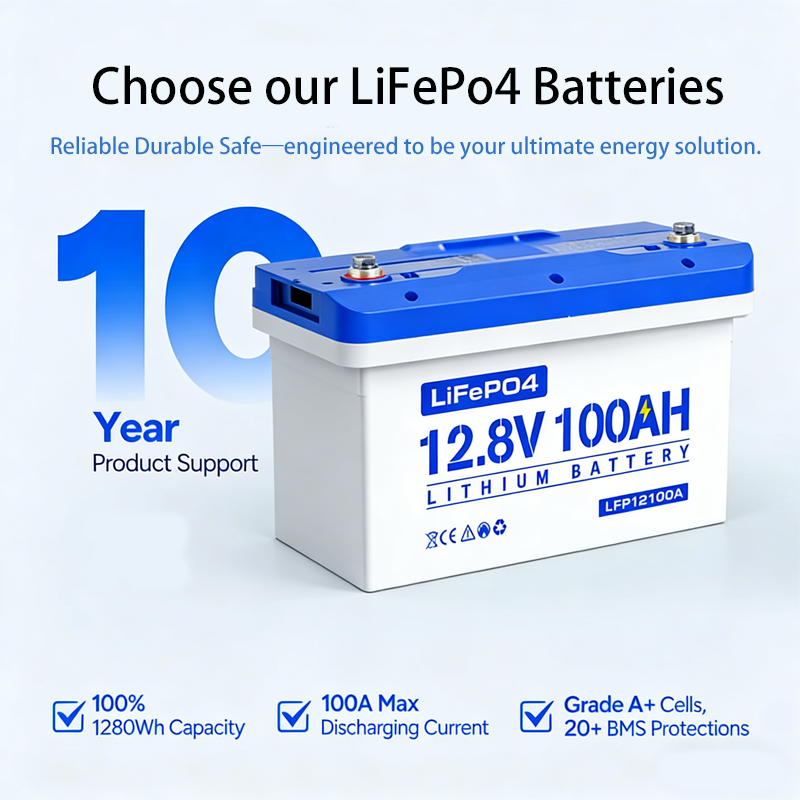
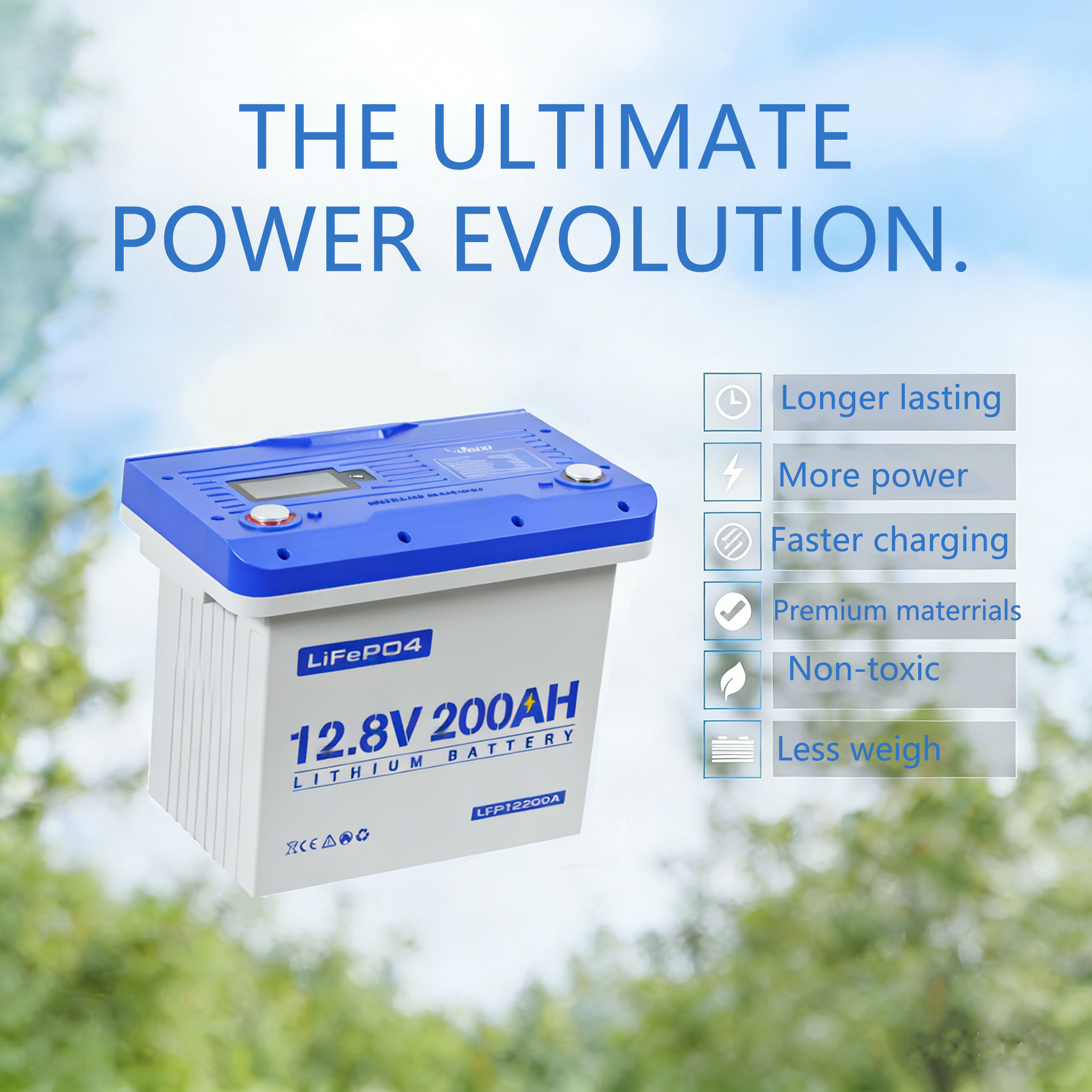
So a LiFePO4 12V battery rated at 100 Ah stores about 1,280 Wh. A 200 Ah version stores about 2,560 Wh under the same nominal voltage.
Why LiFePO4 Chemistry Changes the Game
Compared with common lead-acid packs, a 12V LiFePO4 battery usually offers:
- Higher usable depth of discharge without heavy damage.
- Flatter voltage during discharge, so inverters and sensitive electronics stay happier.
- Lower weight for the same energy level, which matters in mobile setups.
For users who are used to traditional deep-cycle batteries in RVs, boats, and backup carts, this difference shows up clearly. They see less maintenance, more usable energy each day, and a more stable voltage under load.
These traits make LiFePO4 a strong base for modular systems where several 12 V blocks combine into a larger bank.
How Does Connecting 12V LiFePO4 Batteries in Series Change Your System?
Many projects outgrow 12 V quickly. A larger inverter or longer cable runs push current to high levels, which drives the move toward higher system voltage. That is where series connections enter.
What Series Wiring Actually Does
Connecting batteries in series means linking the positive of one battery to the negative of the next. The free negative on the first battery and the free positive on the last battery become the outputs to your system.
In a series string of 12V LiFePO4 batteries:
- Voltage adds up.
- Capacity in Ah stays the same.
Example:
- 2 × 12V 100 Ah in series → 24 V, 100 Ah, about 2.56 kWh.
- 4 × 12V 100 Ah in series → 48 V, 100 Ah, about 5.12 kWh.
The energy equals the sum of all batteries, only the voltage and Ah split changes.
When Series Makes Sense
Series wiring suits systems that use:
- 24 V or 48 V inverters for home backup or off-grid cabins.
- Long cable runs, where higher voltage cuts current and reduces cable size.
- Larger solar charge controllers that expect a higher battery voltage.
With higher voltage, a 2 kW inverter draws far less current, so cables run cooler and the voltage drop falls.
Safety Points for Series Strings
Series strings still follow clear limits. Check three items before you connect:
- Maximum series count allowed for your 12V LiFePO4 battery model.
- Matching of all units in capacity, age, and state of charge.
- Proper overcurrent protection at the string level.
Ignoring series limits can push cell voltages or the BMS beyond safe values, so this is not a place for guesswork.
How Does Connecting 12V LiFePO4 Batteries in Parallel Increase Capacity?
Some users prefer to stay in the 12 V world. Their DC loads already match that voltage, or their small inverter only accepts 12 V. In that case, parallel wiring becomes the main tool for longer runtime.
What Parallel Wiring Actually Does
Connecting batteries in parallel means tying all positives together and all negatives together. The combined positive and negative then feed the system.
In a parallel group of 12V LiFePO4 batteries:
- Voltage stays at 12 V.
- Capacity in Ah adds up.
Example:
- 2 × 12V 100 Ah in parallel → 12 V, 200 Ah.
- 4 × 12V 100 Ah in parallel → 12 V, 400 Ah.
The energy again equals the sum of each unit, this time through rising amp-hours.
When Parallel Makes Sense
Parallel 12 V banks work well in setups like:
- RVs with a 12 V inverter and many DC appliances.
- Small boats that use 12 V trolling motors and navigation gear.
- Compact backup systems where rewiring loads for higher voltage is not realistic.
Parallel wiring lets a LiFePO4 battery 12V 100Ah behave like building blocks. You add units as your needs grow while keeping the same system voltage.
Balance and Protection in Parallel Packs
Current sharing does not happen by magic. To keep each battery in a healthy range:
- Use equal cable lengths to each unit from the common bus.
- Add a fuse or breaker to each battery connection.
- Match batteries by type, capacity, and state of charge before connecting batteries in parallel.
This care avoids one battery working harder than the others and reduces surge currents between units.
Series vs Parallel Batteries: How to Choose the Right 12V LiFePO4 Battery Bank Wiring?
Both topologies have clear roles. A simple comparison helps you decide which fits your system design.
Simple Comparison of Wiring Options
You can view series and parallel like two different tools for the same building blocks.
| Aspect | Series Connection | Parallel Connection |
| System voltage | Increases (24 V, 36 V, 48 V) | Stays at 12 V |
| Capacity (Ah) | Same as one battery | Sums across batteries |
| Cable current | Lower for same power | Higher for same power |
| Typical use | Large inverters, home backup, long runs | RVs, small boats, 12 V DC systems |
| Main decision lever | Inverter voltage requirement | Desired runtime at 12 V |
A good choice starts from the loads and the inverter. If the inverter requires 24 V or 48 V, series wiring is already decided. If all loads live in a 12 V ecosystem, a parallel 12 V LiFePO4 battery bank usually feels natural.
Planning for Growth
Future changes also matter. Think about:
- Space for extra batteries.
- Maximum system voltage you feel comfortable maintaining.
- Charger and solar controller compatibility with series or parallel changes.
Good 12V battery bank wiring leaves room for one more string or one more parallel unit without forcing a full rebuild.
LiFePO4 Battery 12V 100Ah vs 12V 200Ah: Which Bank Size Fits Your System?
Capacity labels can feel abstract until they tie back to concrete use. Two common sizes, 100 Ah and 200 Ah, show how to think about this choice.
When a 12V 100Ah Pack Works Best
A LiFePO4 battery 12V 100Ah fits many mobile and entry setups. It offers:
- Manageable weight for one person to move.
- Enough energy for light camping, weekend RV trips, or office electronics during short outages.
- Flexible pairing in series or parallel later.
Two 12 V 100 Ah units can form a 24 V 100 Ah string for a small inverter. They can also sit in parallel as a 12 V 200 Ah bank if longer runtime matters.
Where a 12V 200Ah Pack Shines
A LiFePO4 battery 12V 200Ah suits users who already know they need longer runtimes or higher daily consumption. It can:
- Support larger inverters at 12 V for longer periods.
- Reduce the number of separate battery cases in the system.
- Simplify wiring because there are fewer interlinks and lugs.
The tradeoff is weight and handling. Larger packs can be heavy and harder to place in tight spaces.
Two 100Ah Units or One 200Ah Unit
For some, two 100 Ah units in parallel feel safer. One battery can be removed for service while the other still keeps essential loads alive at reduced capacity. For others, a single 12V 200Ah pack feels cleaner because the layout stays simple.
Both options sit on top of the same chemistry. The real difference lies in handling, wiring complexity, and how much redundancy you want in the bank.
How to Wire a 12V LiFePO4 Battery Bank Safely Step by Step
Once the plan is clear, the physical work must respect basic electrical safety. A careful routine limits mistakes and keeps the bank consistent.
Preparation and Checks
Before any connection:
- Confirm all batteries share the same type, capacity, and age range.
- Measure open-circuit voltage so values stay close across units.
- Gather cables with proper gauge, lugs, fuses, and a torque wrench.
These steps apply to any layout, series or parallel.
Connecting Batteries in Series
For a series string:
- Place batteries so cables can run clean and short.
- Connect the positive of the first battery to the negative of the second, and so on.
- Tighten each terminal to the torque value given by the battery supplier.
- Add a main fuse or breaker at the positive end of the string.
- Connect the free negative and free positive to the inverter or DC bus.
Check the final voltage. Two 12 V units should read near 24 V, four units near 48 V, depending on their exact chemistry and charge state.
Connecting Batteries in Parallel
For a parallel group:
- Install a common positive bus bar and a common negative bus bar.
- Run equal-length cables from each 12V LiFePO4 battery to the bus bars.
- Place a fuse or breaker in series with each positive connection.
- Tighten all terminal connections carefully.
- Connect the main cables from the bus bars to the loads or the inverter.
If everything is correct, the final voltage at the bus should match that of a single battery.
Final Tests and Monitoring
Turn on a modest load first. Watch for:
- Unusual heating at any terminal or cable.
- Sudden voltage sag that feels inconsistent with expected capacity.
- Alarm signals from inverters or charge controllers.
A healthy bank should deliver stable voltage under light to moderate load. Once that looks right, the system is ready for normal use.
Build a Safe, Flexible 12V LiFePO4 Battery Bank for Your System
A well-planned 12V LiFePO4 battery bank turns a pile of individual packs into a reliable power source that feels solid in daily use. Series wiring raises voltage, so larger inverters and long cables stay efficient. Parallel wiring stretches runtime and keeps 12 V appliances happy. Both paths rely on the same building block, a stable LiFePO4 12V battery with strong cycle life and good safety margins. Compared with many older battery setups, a LiFePO4-based bank keeps its performance more consistent over years of cycling and often delivers a longer working life for the same daily use. That stability makes it easier to design around and easier to trust during bad weather or grid outages.
Clear thinking about voltage, amp-hours, and real loads keeps the design honest. Careful wiring, correct fusing, and matched batteries keep the bank safe. With those habits in place, a set of 12 V LiFePO4 packs can grow with your needs instead of forcing a fresh start every time something changes.
FAQs About 12V LiFePO4 Battery Banks
Q1. Can I mix different 12V LiFePO4 batteries in one bank?
It is safer to avoid mixing brands, capacities, or very different ages. Each pack can have a unique BMS profile and internal resistance. If you must mix, keep unlike batteries in separate strings with their own protection and charging paths.
Q2. How does the BMS affect series and parallel design?
The battery management system sets the real limits for a 12V LiFePO4 battery. It defines maximum continuous current, surge current, low and high voltage cutoffs, low temperature charging behavior, and the allowed series or parallel count. Always design around the BMS data sheet.
Q3. What charger settings are best for a 12V LiFePO4 battery bank?
Most LiFePO4 12V battery banks use a constant voltage around 14.2 to 14.6 volts for bulk and absorption, with a lower float or no float at all. Equalization modes for lead-acid should stay disabled. Follow the charging profile recommended by the battery supplier.
Q4. How does cold weather affect a 12V LiFePO4 system?
Discharging at low temperatures is usually fine within the rated range, but charging below freezing can damage cells if the BMS does not block it. Many 12V LiFePO4 batteries include low-temperature protection or internal heaters. In cold regions, confirm this before installation.
Q5. Do I need extra protection devices beyond basic fuses?
A robust 12V battery bank wiring plan often includes DC-rated breakers, a main disconnect switch, and bus bars with covers, in addition to fuses. A good battery monitor also helps track the state of charge and catches abnormal current draw before it becomes a serious issue.
