
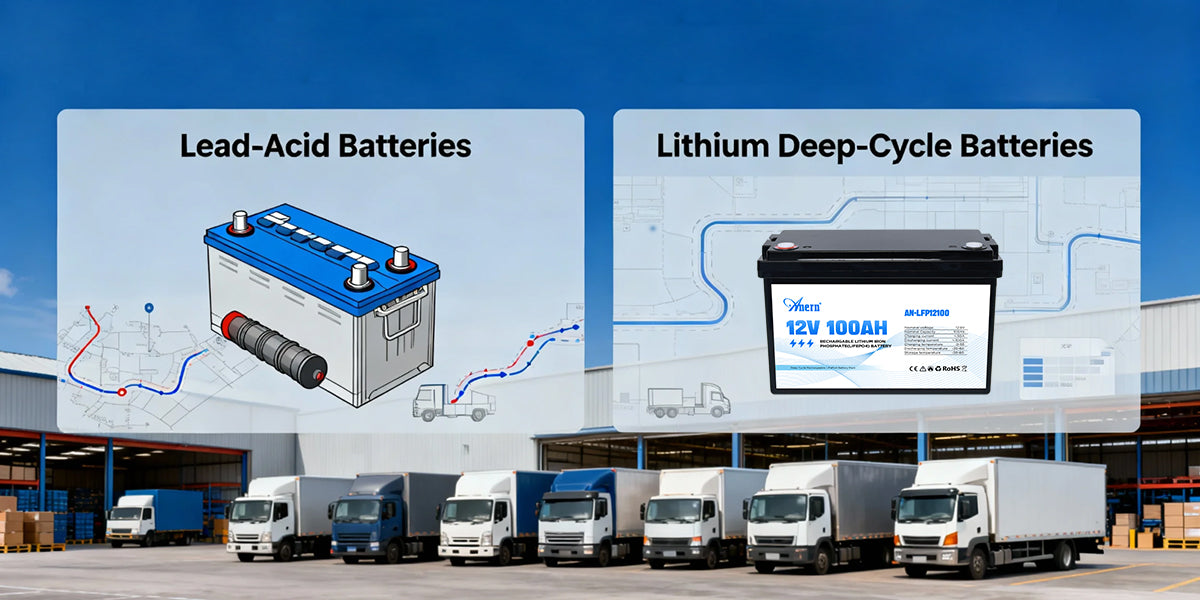
When choosing a power solution for commercial fleets, fleet managers face a critical decision: should they go with traditional lead-acid batteries or the more modern lithium deep-cycle batteries? Both have their benefits, but the choice ultimately impacts the fleet's performance, cost, and long-term operational efficiency. In this article, we’ll explore the key differences, performance implications, and financial considerations to help you make an informed decision.
What Is a Deep-Cycle Battery in Commercial Fleet Use?
Deep-cycle batteries are designed to provide sustained energy over long periods, making them ideal for commercial fleet use. Unlike regular starting batteries, which provide short bursts of power to start an engine, deep-cycle batteries can be repeatedly discharged and recharged without significantly reducing their lifespan.
Deep-cycle batteries are crucial for operations that require a consistent and long-term energy supply, such as forklifts, electric vehicles, and material handling equipment. These batteries can be either lead-acid or lithium, with both types being commonly used in commercial fleets.
How Do Lead-Acid vs Lithium Batteries Affect Fleet Performance?
The performance of lead-acid and lithium deep-cycle batteries varies significantly, particularly in high-demand commercial fleet applications. Understanding the differences in performance can help fleet managers make a more informed decision.
Voltage Consistency and Power Output
Lead-acid batteries tend to show voltage sag as they discharge. This means that as the battery is used, its voltage drops, resulting in less power delivered over time, which can affect the performance of equipment.
Lithium batteries, on the other hand, maintain a consistent voltage throughout the discharge cycle, providing reliable power and performance until the battery is almost completely drained. This consistency is particularly beneficial in multi-shift operations where reliability is critical.
Charge and Usage Efficiency
Lithium batteries are typically more energy-efficient. They charge faster (1-3 hours), while lead-acid batteries require 8-12 hours to charge fully. This difference can lead to significant downtime for lead-acid batteries and can be a bottleneck in operations that require quick turnarounds.
What Are the Real Costs of Lead-Acid vs Lithium Deep-Cycle Batteries Over 5–10 Years?
When considering battery options, the initial purchase price is only one factor. Fleet managers must also account for long-term costs, including maintenance, replacement cycles, and energy usage.
Initial Purchase Cost
Lead-acid batteries are typically cheaper upfront, with prices ranging from $150–$1,500 depending on size and type.
Lithium deep-cycle batteries have a higher initial cost, usually ranging from $700–$2,000, but they come with several advantages in the long run, including longer lifespan and less maintenance.
Note: Price ranges vary significantly by capacity, brand, and distribution channel. For small-capacity batteries used in light equipment (typically 12V 100-150Ah), lead-acid deep-cycle batteries range from $150-$1,500, while comparable lithium units cost $700-$2,000.
For commercial fleet applications such as forklifts (48V, 400-600Ah), lead-acid batteries typically range from $2,000-$6,000, while industrial lithium forklift batteries range from $15,000 to $25,000 or more for high-capacity, branded units.
Maintenance Costs
Lead-acid batteries require frequent maintenance, including water replenishment, cleaning, and checking for corrosion. These maintenance tasks add to labor costs and downtime.
Lithium batteries, however, require minimal maintenance. They are sealed and don’t require the same level of attention, reducing labor and downtime costs over time.
| Cost Category | Lead-Acid Batteries | Lithium Deep-Cycle Batteries |
| Upfront Cost | $150–$1,500 | $700–$2,000 |
| Maintenance Cost | High (regular checks) | Low (minimal maintenance needed) |
| Replacement Frequency | Every 500–1,000 cycles (at 50% DoD) | Every 2,000–5,000+ cycles (at 80%+ DoD) |
Total Cost of Ownership (TCO)
Over the lifespan of the batteries, lithium batteries often come out ahead. Despite the higher initial investment, they last longer and require less maintenance, resulting in lower total cost of ownership over 5-10 years.

How Do Cycle Life and DoD Impact the Value of Lithium Deep-Cycle Batteries?
Cycle life and depth of discharge (DoD) are key factors that influence battery lifespan and overall efficiency, which can affect long-term fleet costs.
Cycle Life
Battery cycle life varies significantly based on depth of discharge (DoD). Lead-acid batteries generally achieve 500-1,000 cycles when operated at the recommended 50% DoD. Deeper discharge significantly accelerates degradation.
Lithium deep-cycle batteries, particularly LiFePO4 chemistry, typically provide 2,000 to over 5,000 cycles even at high DoD levels (80% or more). Combined with their ability to use 80-100% of rated capacity versus only 50% for lead-acid, lithium batteries deliver substantially higher usable energy throughput over their lifespan.
Depth of Discharge
Lead-acid batteries should only be discharged to about 50% DoD to prevent premature aging and damage.
Lithium batteries can be discharged to 80-90% DoD without damaging the battery, which means they provide more usable energy per charge cycle.
Performance and Energy Efficiency: Charging Time and Cost Considerations
Charging time and energy efficiency play a vital role in operational costs and downtime. Faster charging and higher energy efficiency can significantly improve fleet performance.
Charging Speed and Efficiency
Lead-acid batteries have a slower charging process, often requiring 8-12 hours to fully charge, making them unsuitable for opportunity charging (charging during short breaks between shifts).
Lithium batteries charge much faster, typically in 1-3 hours, and can be opportunity-charged multiple times throughout the day, which maximizes uptime.
Energy Efficiency and Cost Savings
Lithium batteries have a higher round-trip efficiency (RTE), typically around 95%, compared to lead-acid batteries, which may have an RTE of 80-85%. This means that lithium batteries waste less energy during the charging and discharging process, leading to lower electricity costs over time.
Ops & Labor: Maintenance, Downtime, and Long-Term Efficiency
The need for maintenance and the potential for downtime are often overlooked but have a major impact on the total cost of ownership and fleet efficiency.
Maintenance Requirements
Lead-acid batteries require periodic maintenance such as water replenishment, cleaning, and corrosion inspection. These tasks contribute to operational downtime and additional labor costs.
Lithium deep-cycle batteries, with their sealing and Battery Management System (BMS), require significantly less maintenance, leading to fewer disruptions and lower labor costs.
Long-Term Efficiency
Over time, the efficiency and reliability of lead-acid batteries tend to decline more rapidly than lithium batteries, especially in multi-shift environments where downtime is costly.
Which Battery Type Is Best for Different Fleet Scenarios?
Different fleet applications require different power solutions. Choosing the right battery depends on the specific demands of your fleet, from charge cycles to energy needs.
Low-Intensity Applications
For fleets that operate in low-demand environments, lead-acid batteries may still be a viable option due to their lower upfront cost. These include applications where equipment is used less frequently, and downtime for charging is not an issue.
High-Intensity Applications
For fleets involved in high-demand or multi-shift operations, lithium batteries provide better overall value. They are particularly beneficial in material handling, warehouse management, and electric vehicles, where uptime is critical, and quick charging is needed to keep operations running smoothly.
Conclusion: Choosing the Right Battery for Long-Term Savings
When comparing lead-acid vs lithium deep-cycle batteries, the decision largely depends on the specific needs of the fleet. Lead-acid batteries may be suitable for low-intensity applications, but for high-demand, high-frequency use, lithium batteries provide a far better return on investment.
By considering factors such as upfront cost, maintenance, cycle life, and charging time, fleet managers can make an informed decision that will benefit their bottom line over the long term. Lithium deep-cycle batteries ultimately offer more efficiency, fewer disruptions, and lower total costs, making them the ideal choice for most commercial fleet operations.
FAQs
Q1. How do environmental conditions affect the performance of lithium deep-cycle batteries?
Lithium batteries perform well in a wide range of temperatures, typically between -20°C and 60 °C. However, extreme cold can reduce their efficiency, while high heat can impact their lifespan. Proper insulation and temperature management can help maintain optimal performance, especially in outdoor or unregulated environments.
Q2. Can lithium deep-cycle batteries be recycled?
Yes, lithium deep-cycle batteries are recyclable. However, the process is more complex than that of lead-acid batteries due to the materials involved. Recycling programs and facilities are expanding globally to ensure these batteries are properly processed to recover valuable components like lithium, cobalt, and nickel.
Q3. Are lithium deep-cycle batteries safe in commercial fleets?
Yes, lithium deep-cycle batteries are safe for commercial use. They are equipped with Battery Management Systems (BMS) that protect against overcharging, over-discharging, and temperature extremes. However, proper installation and adherence to safety guidelines are necessary to prevent issues like overheating or short circuits.
Q4. How do lithium and lead-acid batteries compare in terms of weight?
Lithium batteries are significantly lighter than lead-acid batteries. A lithium deep-cycle battery weighs about 30–50% less than its lead-acid counterpart, providing an advantage in weight-sensitive applications like electric vehicles and material handling equipment, where reducing weight directly improves performance and energy efficiency.
Q5. Can lithium deep-cycle batteries be used in off-grid systems?
Yes, lithium deep-cycle batteries are an excellent choice for off-grid systems. Due to their higher efficiency, longer lifespan, and faster charging capabilities, they are well-suited for solar-powered or remote energy systems. Their ability to perform better in deep discharges makes them ideal for off-grid energy storage applications.
