












The idea of Vehicle-to-Grid (V2G) technology is compelling. It transforms your electric vehicle from just a mode of transport into a dynamic energy asset that can support the power grid and even earn you money. Yet, a persistent question casts a shadow over this potential: does discharging your car's battery for the grid cause it to wear out faster? The concern is valid, but the answer is more nuanced than a simple yes or no. Advanced battery degradation models give us a much clearer picture, and the findings might surprise you.
The Basics of Battery Aging
Before assessing V2G's impact, it's important to know what causes a battery to degrade in the first place. All lithium-ion batteries, whether in an EV or a home energy storage system, lose capacity and power over time. This aging process is influenced by several key operational factors.
Key Factors Influencing Battery Health
Battery degradation is not random; it's a predictable process driven by specific stressors. The main variables include:
- State of Charge (SoC): Consistently keeping a battery at very high (above 90%) or very low (below 10%) states of charge accelerates chemical breakdown.
- Depth of Discharge (DoD): This refers to how much of the battery's capacity is used in a single cycle. Deeper discharges are generally more stressful than shallow ones.
- C-rate: This measures the speed of charging or discharging relative to the battery's capacity. Very high C-rates, typical of rapid DC fast charging, generate more heat and stress.
- Temperature: Extreme heat is a primary enemy of battery health, significantly speeding up degradation. Cold temperatures can also reduce performance and efficiency.
Understanding these variables is fundamental to maximizing battery lifespan. For a deeper look at these performance metrics in stationary systems, the ultimate reference on solar storage performance offers valuable benchmarks that apply to the core principles of battery care.
What is a 'Cycle' in the Context of V2G?
A common misconception is that each V2G event constitutes a full, damaging 'cycle'. In reality, most V2G applications, such as frequency regulation, involve numerous small, shallow, and rapid charge/discharge events. These 'micro-cycles' are very different from a deep cycle where you drive your car until the battery is nearly empty. The cumulative impact of these micro-cycles is what degradation models help us quantify.
How V2G Interacts with Your Battery
Intelligent V2G systems are not designed to drain your battery. Instead, they use a small portion of its capacity to perform valuable services for the grid. This is a crucial distinction that changes the entire degradation equation.
The Myth of Constant, Deep Discharges
The primary function of V2G is often not bulk energy transfer but providing ancillary services. For example, a V2G-enabled car can help stabilize grid frequency by absorbing or injecting small amounts of power in fractions of a second. As noted in an IRENA report on electricity storage, V2G allows EVs to perform energy arbitrage, shifting energy from off-peak to peak hours. This process is managed to minimize battery strain, not maximize discharge.
Smart Charging vs. V2G: What's the Difference?
It's also helpful to distinguish V2G from its simpler counterpart, V1G or 'smart charging'. V1G is a one-way street: the grid operator can control *when* your EV charges to avoid peak demand, but it cannot draw power back from the car. V2G is a two-way communication, enabling both smart charging and discharging. Both are forms of Vehicle-Grid Integration (VGI) that help create a more flexible and resilient energy system.
What Degradation Models Reveal About V2G
This is where theory meets data. Researchers use sophisticated battery degradation models to simulate the long-term effects of different usage patterns, including V2G. These models account for chemistry, temperature, C-rate, and SoC to predict capacity fade over thousands of cycles.
The 'Sweet Spot': The 60-80% SoC Window
A key finding from multiple studies is the existence of an optimal SoC window for V2G operations. Research highlighted in the Innovation Outlook: Smart charging for electric vehicles shows that V2G-induced degradation is minimal when the battery operates within a 60-80% SoC range. By avoiding the stressful high and low voltage states, smart V2G can provide grid services with negligible impact on battery health. The impact within this window is often comparable to normal, slow AC charging.
Can V2G Actually Extend Battery Life?
Perhaps the most compelling finding from some degradation models is that V2G might even extend battery lifespan under certain conditions. A model from Warwick University showed that V2G-friendly profiles could prolong battery life. The logic is straightforward: one of the worst things for a lithium-ion battery is sitting at 100% charge for extended periods, as this accelerates calendar aging. A smart V2G program can be configured to discharge the battery from 100% down to a healthier level like 80% after charging is complete, effectively reducing the time spent in a high-stress state. This 'valley filling' service not only helps the grid but also benefits the battery.
Comparing V2G Cycling to Other Stressors
To put V2G's impact in perspective, it's useful to compare it with other common activities. The following table provides a simplified comparison of different usage scenarios and their typical effect on battery degradation.
| Activity | Typical DoD | Typical C-Rate | Estimated Impact on Degradation |
|---|---|---|---|
| Fast DC Charging | 50-70% | High (1C to 3C) | High |
| Daily Commute Driving | 20-40% | Low to Medium | Moderate |
| Smart V2G (Grid Services) | 5-10% | Low to Medium | Low to Minimal |
| Leaving EV at 100% SoC | 0% | N/A | Moderate (Calendar Aging) |
| Slow AC Charging at Home | Varies | Low (0.2C) | Low |
The Role of Smart Management Systems
The benefits of V2G are not realized by chance. They depend on sophisticated software and management platforms that orchestrate the process intelligently, always prioritizing the vehicle owner's needs and the battery's long-term health.
Aggregators and Virtual Power Plants (VPPs)
Individual EV owners do not directly negotiate with the grid. Instead, they participate through an aggregator. As the IRENA innovation report explains, V2G operation requires an aggregator that acts as an intermediary. This entity bundles hundreds or thousands of EVs into a 'Virtual Power Plant' (VPP), managing their collective charging and discharging to provide a reliable service to the grid operator. This platform uses algorithms to optimize dispatch while respecting each battery's health constraints.
Setting Your V2G Preferences
A crucial feature of any user-friendly V2G program is control. As an EV owner, you can typically set your own preferences within an app. For example, you can define a minimum SoC level (e.g., 'never discharge below 50%') to ensure you always have enough range for your needs. You can also set specific times when your vehicle is available for V2G services, ensuring it never interferes with your driving schedule. This combination of smart automation and user control makes V2G a practical and safe technology.
A New Perspective on V2G and Battery Health
The narrative that V2G 'kills' batteries is outdated. It stems from a simplistic view of battery cycling. Modern degradation models and real-world pilot programs demonstrate that when managed intelligently, V2G's impact on battery life is minimal and can even be positive. The key lies not in avoiding V2G, but in embracing smart V2G strategies that operate within optimal SoC windows, use low C-rates, and prioritize battery health.
By turning EVs into active grid participants, we can accelerate the adoption of renewable energy, enhance grid stability, and create new value for vehicle owners. The future of energy is interconnected, and your car's battery is set to play a starring role.
Disclaimer: This article is for informational purposes only and does not constitute financial or investment advice. Battery degradation is complex and depends on many variables specific to your vehicle, charger, and usage patterns.
Frequently Asked Questions
What is the typical end-of-life (EoL) for an EV battery?
EoL is usually defined as the point when the battery's capacity drops to 70-80% of its original capacity. According to research like the Innovation Outlook: Smart charging for electric vehicles, this does not mean the battery is useless; it can often be repurposed for less demanding applications, such as stationary energy storage.
Does the type of battery chemistry (e.g., LFP vs. NMC) affect V2G degradation?
Yes, significantly. Lithium Iron Phosphate (LFP) batteries generally tolerate a higher number of cycles and can be charged to 100% with less degradation compared to Nickel Manganese Cobalt (NMC) chemistries. This makes LFP-equipped EVs particularly well-suited for V2G applications, as their inherent durability aligns well with frequent, shallow cycling.
Will using V2G void my car's battery warranty?
This is an evolving area. Currently, many manufacturer warranties do not explicitly cover V2G-related degradation. However, as V2G becomes more mainstream and certified by automakers, warranty terms are expected to adapt. Always check your specific vehicle's warranty and consult with the manufacturer before participating in a V2G program.
Can V2G help me integrate my home solar system?
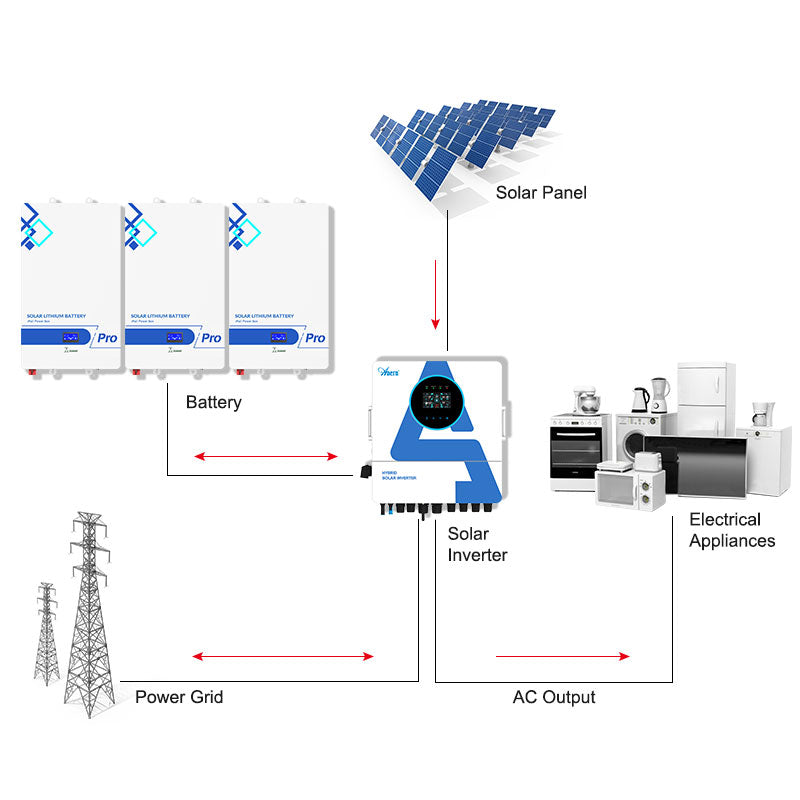
Absolutely. This is known as Vehicle-to-Home (V2H). Your EV battery can store excess solar energy generated during the day and discharge it to power your home in the evening. This increases your self-consumption of solar power and reduces reliance on the grid, similar to how a dedicated home energy storage system works.
