
Power problems show up fast in an SME. Cameras go dark. Card payments fail. A freezer warms up. A production line stops mid-run. Even short outages can trigger hours of cleanup.
A microgrid changes the situation. It gives a site the ability to run connected to the utility grid during normal conditions, then switch to local power during a grid failure. That switch only works when storage can respond instantly and cycle reliably. In many commercial projects, a LiFePO4 lithium battery becomes the core storage choice because it supports frequent cycling, strong day-to-day efficiency, and a clear safety path when engineered and installed to recognized standards.
What Is a Business Microgrid?
A business microgrid operates like a small power system for a defined site. The U.S. Department of Energy describes a microgrid as a group of loads and distributed energy resources within clear electrical boundaries that can act as a single controllable entity. It can connect to the larger grid, and it can also run in island mode during a disturbance.
What SME Microgrids Usually Include
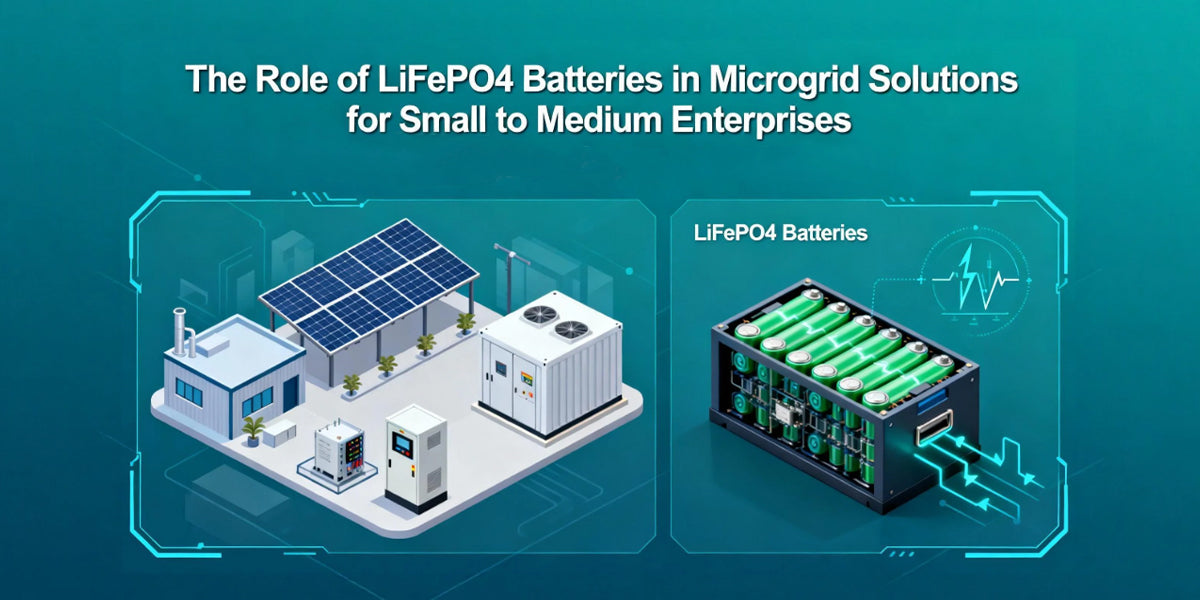
Most microgrid solutions for business share the same building blocks:
- Local generation, often solar PV, sometimes paired with a generator or CHP
- Inverters and power electronics for stable AC power
- Energy storage, usually batteries, for fast response and ride-through
- A controller or energy management system (EMS) for dispatch and priorities
- Switchgear and protection for safe isolation and reconnection
A microgrid can be sized for critical loads only or for a larger share of the facility. SMEs often choose a critical load approach because it stays cost-disciplined and speeds permitting.
Microgrid vs UPS vs Generator
A UPS keeps power steady for seconds to minutes. A generator can run for hours, yet it needs fuel and maintenance, and it takes time to start. A microgrid can coordinate both, while also using solar and storage to reduce daily utility costs. The storage piece matters because it covers the instant gap during transitions.
Why Do SMEs Need Business Energy Resilience?
Energy resilience matters most when operations cannot pause. Many SMEs already know the pain. They just do not call it “resilience.”
Pain Points That Hit SMEs First
Different industries feel outages in different ways, but several risks repeat:
- Security exposure: cameras, access control, and alarms can fail without backup power.
- IT and communications downtime: routers, switches, and local servers need stable power.
- Product loss: refrigeration and cold rooms can cross safe temperature limits quickly.
- Process disruption: motors, pumps, and controls may trip, then require manual resets.
- Customer friction: POS and payment systems can go offline at peak hours.
Resilience also affects costs on normal days. Many U.S. commercial tariffs include demand charges based on the highest 15-minute or 30-minute peak in a billing period, depending on the utility rate design. That peak can come from a short burst of HVAC, compressors, or equipment startup. A microgrid can reduce that exposure through peak shaving and load management.
Energy Independence in Practical Terms
SMEs rarely need total separation from the grid. They need control. A grid-connected microgrid can prioritize local generation, store energy for later use, and keep critical loads powered during outages. That combination supports business continuity and reduces reliance on emergency scrambles.
How Do LiFePO4 Batteries Power Microgrid Solutions for Business?
A microgrid depends on storage for speed and stability. The battery smooths PV output, supports load steps, and carries the site through switching events. A LiFePO4 lithium battery can fit that job well because the chemistry suits frequent cycling and stable discharge behavior.
Fast Response During Transitions
When grid power drops, loads do not ramp down gently. The inverter and battery must hold voltage and frequency right away. Storage covers that instant response. It also helps manage short surges when motors or compressors restart.
That fast response protects sensitive electronics, too. Network closets and control systems tend to fail hard under voltage sag. Stable microgrid operation reduces those events.
High Efficiency Helps Every Day
Daily cycling often drives microgrid value. Peak shaving, solar self-consumption, and time shifting all depend on repeated charge and discharge. Round-trip efficiency affects how much energy gets lost as heat. NREL reports lithium-ion storage can reach up to about 95% round trip efficiency in some contexts, with real-world performance shaped by system design, temperature, and operating profile.
Higher efficiency supports two outcomes that SMEs care about: lower wasted kWh and less thermal burden inside the enclosure.
Cycle Life That Matches Frequent Dispatch
Microgrids cycle storage far more often than a traditional standby setup. Capacity fade matters. Peer-reviewed studies describe lithium-ion cycle life in the thousands of cycles under defined test conditions, often referenced at around 80% depth of discharge, with results varying by temperature and control strategy.
A microgrid controller can extend life by limiting deep cycling during routine dispatch. It can reserve energy for outages and still deliver daily cost benefits. Under that operating approach, a LiFePO4 lithium battery becomes an asset used every week, not a backup that sits idle.

LiFePO4 vs Other Batteries for Microgrid Applications
Battery choice should align with the operating plan. A microgrid that cycles daily needs a different fit than a system built only for rare emergencies.
What Decision Makers Should Compare
Use a short list. Keep it operational.
- Safety pathway for the full system, including testing and local code expectations
- Usable depth of discharge and how it affects long-term capacity
- Efficiency across routine cycling
- Maintenance burden and replacement frequency
- Site constraints such as footprint, ventilation, and temperature control
Practical Comparison Table
| Factor | LiFePO4 | Other Li Ion Chemistries | Lead Acid |
| Typical Microgrid Fit | Frequent cycling and stationary storage | Often, higher energy density system design drives performance | Backup oriented, limited cycle duty |
| Daily Efficiency | Strong in many stationary systems | Strong in many stationary systems | Lower losses rise under deep cycling |
| Cycling Profile | Suits repeated dispatch under good controls | Suits repeated dispatch under good controls | Deep discharge reduces life quickly |
| Maintenance and Replacement | Lower routine maintenance at the system level | Similar, depends on BMS and thermal design | Higher maintenance, more frequent replacement cycles |
| Safety and Compliance Approach | Benefits from recognized system testing pathways | Benefits from recognized system testing pathways | Venting and installation constraints can apply |
Research comparing cathode types often finds that LFP cells show stronger thermal stability than some higher energy density chemistries during abuse conditions. Still, chemistry alone does not make a project safe. Safety depends on the pack, the enclosure, the BMS, installation spacing, and emergency response design.
For SMEs, that leads to a clear takeaway. Choose storage that can cycle reliably, then insist on a project that follows accepted safety standards and local permitting requirements. Under that framework, a LiFePO4 lithium battery often aligns well with microgrid duty.
How to Size LiFePO4 Energy Storage for SMEs
Sizing determines performance. It also determines the budget. A solid sizing method stays tied to measured loads and a clear outage plan.
Step 1: Define the Critical Load List
List what must stay on during a grid failure. Use real site data when possible.
Common critical loads include:
- Security systems and cameras
- Networking and IT closets
- Emergency lighting and life safety equipment
- Refrigeration and cold storage
- Essential controls and key process equipment
Step 2: Separate Power From Energy
Power uses kW. Energy uses kWh. Both matter, but they solve different problems.
- kW sizing determines whether the microgrid can carry peak demand and motor starts.
- kWh sizing determines how long the site can run in island mode.
A site can have plenty of kWh on paper and still fail if the inverter and battery cannot deliver the needed kW at the moment.
Step 3: Use a Fill-In Worksheet That Matches Reality
Replace guessing with a simple worksheet. Metered data works best. If metering is not available, use conservative nameplate estimates and validate later.
| Load Group | Typical kW | Priority | Required Hours (Your Target) |
| Security and Network | Enter measured kW | High | Enter hours |
| Refrigeration | Enter measured kW | High | Enter hours |
| Controls and Lighting | Enter measured kW | Medium | Enter hours |
| Process Essentials | Enter measured kW | Medium | Enter hours |
| Noncritical Loads | Enter measured kW | Low | 0 |
Then apply realistic system factors:
- Inverter and conversion losses
- A reserve margin for unexpected load steps
- Capacity fade planning across service life
- A protected energy block for emergencies
That planning keeps LiFePO4 energy storage aligned with real site needs, not optimistic math.
Step 4: Plan for Expansion and Service Access
SMEs evolve. A shop adds a second shift. A warehouse expands cold storage. A data closet grows.
Design for modular expansion when possible. Keep maintenance access clear. Confirm ventilation and temperature control expectations early. A LiFePO4 lithium battery system often supports modular growth, but the electrical design and permitting path decide what expansion looks like.
How to Improve Microgrid Reliability During Grid Failures
A microgrid should feel boring during a real outage. That outcome comes from planning, protection, and testing.
Islanding Needs Clear Rules
A reliable microgrid uses protection and control logic that can detect a grid disturbance, isolate safely, and stabilize the local system. It also needs a safe reconnection process once grid conditions return.
Plan for:
- Detection and disconnection thresholds
- Transfer timing and ride-through behavior
- Reclose checks and synchronization rules
- Operator visibility and alarms
Load Shedding Prevents Collapse
A common failure mode comes from trying to power too much. The microgrid sags, then trips. Automation prevents that.
Create load tiers:
- Tier 1: must stay on
- Tier 2: can drop during long outages
- Tier 3: off during island mode
Automate the tiers through the controller. Test them. Adjust after a real drill.
Standards and Permitting Keep Projects Deployable
Safety and compliance cannot be an afterthought. UL 9540 and UL 9540A often enter conversations around system certification and thermal event behavior testing. NFPA 855 provides an installation safety framework for stationary energy storage in many jurisdictions. Local AHJ rules and utility interconnection requirements still govern the final design.
A LiFePO4 lithium battery project gains credibility when the engineering package matches those expectations. It also reduces delays, since inspectors and insurers tend to ask the same core questions.
Make LiFePO4 Storage the Backbone of Your SME Microgrid
SMEs need power that stays predictable. Utility bills should not punish short peaks. Outages should not force shutdown decisions made under pressure. A microgrid can address both goals, and storage carries the biggest share of that responsibility.
A LiFePO4 lithium battery fits many SME microgrid plans because it supports frequent cycling, strong efficiency, and an established safety pathway when built and installed to recognized standards. The best results come from disciplined sizing and clear load priorities. Pull site load data, define critical loads, then size power and energy around real operations. That approach keeps the microgrid practical, keeps the risk manageable, and gives the business a dependable foundation for energy resilience.
FAQs
Q1. Do LiFePO4 Batteries Need Heating in Cold Climates for Microgrids?
In cold regions, charging limits matter more than discharging. Many systems use enclosure insulation, thermostatic heaters, or controlled charging to keep cells within safe ranges. For outdoor installs, verify low-temperature charge specs, heater power draw, and winter startup behavior.
Q2. What Monitoring Data Should an SME Track to Prevent Battery Downtime?
Track state of charge trends, cell voltage spread, temperature spread, inverter fault codes, and event logs for grid transitions. Watch for rising internal resistance signals, frequent high current events, and abnormal thermal cycling. A simple alert plan can prevent surprise shutdowns.
Q3. How Often Should a Microgrid Battery System Be Inspected or Serviced?
Most routine work is visual and preventative. Many sites schedule quarterly checks for connections, airflow paths, filters, corrosion, and enclosure seals, plus an annual review of firmware, protection settings, and logs. Follow the manufacturer’s O&M plan and local code requirements.
Q4. What Interconnection Issues Commonly Delay SME Microgrid Projects?
Projects often stall on protection studies, anti-islanding requirements, export limits, and meter configuration. Utilities may require specific relay settings, commissioning tests, and documentation. Start interconnection discussions early, and align EMS controls with tariff rules and export constraints.
Q5. How Can SMEs Protect Battery Assets From Cyber and Access Risks?
Limit network exposure with segmented VLANs, strong authentication, and least privilege access for EMS and inverter portals. Disable unused remote services, enforce patch schedules, and log access changes. Physical security matters too; use locked enclosures and controlled maintenance permissions.
