













When you live off-grid, system reliability is not a luxury; it is a necessity. A system fault can mean a sudden loss of power, so the speed at which you can diagnose and fix an issue is critical. A central design choice that impacts this is whether your system uses DC or AC coupling. Both architectures are effective for off-grid solar, but they handle and report faults in fundamentally different ways. Understanding these differences helps you build a more resilient and easier-to-maintain energy system.
This comparison will examine the fault resolution process in both DC- and AC-coupled systems. We will look at their core designs, how they detect problems, and which one typically allows for quicker troubleshooting to restore your power.
Understanding System Architectures: DC vs. AC Coupling
The way your solar panels, batteries, and inverter are connected defines the system's architecture. This structure directly influences efficiency, scalability, and how the system behaves when a component fails.
What is DC Coupling?
In a DC-coupled system, power flows from your solar panels through a solar charge controller, which then charges your battery bank. All this happens on the direct current (DC) side of the system. A single inverter then draws power from the batteries to convert it to alternating current (AC) for your household appliances. This is a classic, highly efficient design for off-grid applications, especially for charging batteries.
- Power Path: Solar Panels → Charge Controller → Battery Bank → Inverter → AC Loads.
- Key Feature: Solar energy is used to charge batteries with maximum efficiency, as it remains in DC form without extra conversions.
- Common Use: Often preferred for new, self-contained off-grid systems like cabins, RVs, and remote homes where battery charging is the primary goal.
What is AC Coupling?
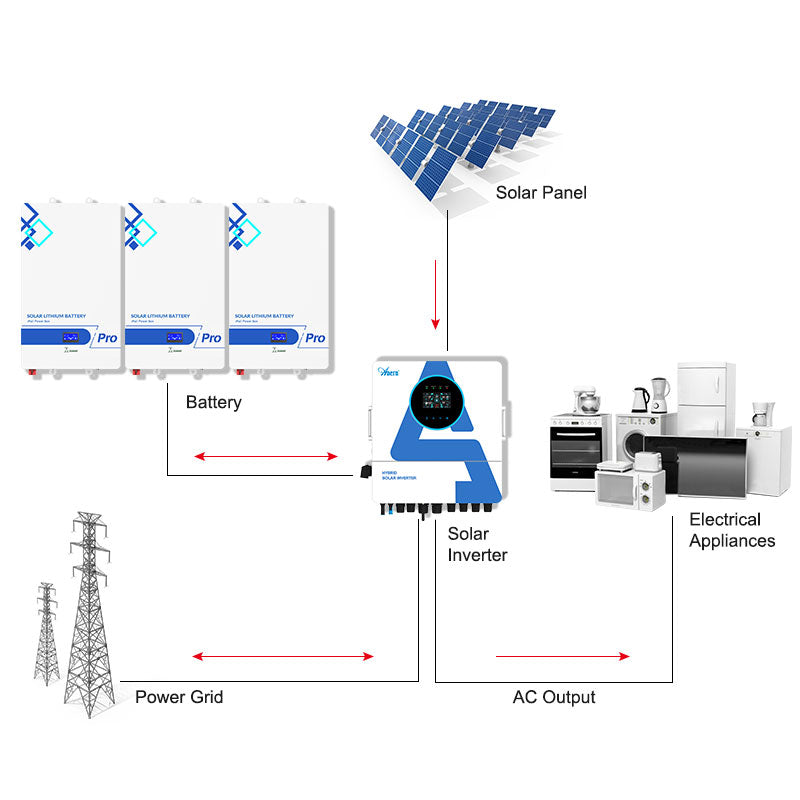
An AC-coupled system operates more like a collection of independent microgrids. The solar panels are connected to their own grid-tie inverter, which immediately converts DC power to AC. This AC power is then used by your appliances or sent to a separate battery-based inverter/charger. This second inverter converts the AC power back to DC to charge the batteries. It also forms a stable, local AC grid for the solar inverter to synchronize with.
- Power Path: Solar Panels → Solar Inverter → AC Bus ←→ Battery Inverter/Charger ←→ Battery Bank.
- Key Feature: Highly modular. You can easily expand your solar capacity by adding more solar panels and another solar inverter to the AC bus.
- Common Use: Ideal for retrofitting existing grid-tie solar systems for battery backup or for large, expandable off-grid properties.
Fault Detection Mechanisms in Each System
The speed of fault resolution begins with detection. How your system alerts you to a problem depends entirely on its architecture and the components involved.
Fault Detection in DC-Coupled Systems
DC-coupled systems are generally more centralized. The solar charge controller and the main inverter are the two 'brains' of the operation. Most faults, such as a problem with a solar panel, wiring, or the battery bank, are registered by the charge controller or the inverter. Diagnostics are focused on the DC side of the system. For example, if solar production drops unexpectedly, the charge controller's logs are the first place to look. The diagnostic path is often linear and straightforward.
Fault Detection in AC-Coupled Systems
AC-coupled systems are decentralized, with at least two inverters operating in tandem. The solar inverter manages the PV array, while the battery inverter manages the battery and creates the local grid. A fault can originate in either inverter or in the communication link between them. For instance, if the system shuts down, is it because the solar inverter detected an issue and stopped producing, or did the battery inverter fail to maintain the grid signal? As the Integrating Solar and Wind report from the IEA highlights, systems with high levels of inverter-based resources can present unique protection challenges. This complexity can sometimes make pinpointing the original cause more difficult, requiring you to check the status and error logs of multiple devices.
Comparing Fault Resolution Speed and Process
When the power goes out, every minute counts. The architectural differences between DC and AC coupling lead to distinct troubleshooting workflows, affecting how quickly you can get your system back online.
DC Coupling: A More Direct Path to Diagnosis
The simplicity of a DC-coupled system is its greatest strength in a fault scenario. With fewer power conversion steps and a more centralized control logic, isolating a problem is often faster. If a specific solar string fails, a modern charge controller can help identify it. As noted in research on power optimization, techniques like galvanic isolation in DC-DC converters can allow operators to isolate a faulty module string while the rest of the system continues to run. This principle of easy isolation is a core benefit of DC-coupled designs. The troubleshooting process typically follows a clear path: check the panels, check the charge controller, check the batteries, and check the inverter. This linear approach eliminates guesswork.
AC Coupling: The Challenge of Multiple Brains
In an AC-coupled system, the diagnostic process can be more complex. The two inverters must communicate perfectly. The battery inverter is 'grid-forming,' creating the stable AC frequency the solar inverter needs to see before it will turn on and produce power. A fault could be a simple hardware failure in one inverter, or it could be a nuanced software or communication issue that causes the solar inverter to 'see' an unstable grid and shut down as a safety precaution. However, this modularity also provides a unique form of redundancy. If your solar inverter fails completely, the battery inverter can still power your home from the batteries. You lose your solar generation, but not all power.
A Practical Comparison
This table summarizes the key differences in fault handling between the two architectures.
| Feature | DC-Coupled System | AC-Coupled System |
|---|---|---|
| Diagnostic Complexity | Lower. Fewer components and a linear power path simplify troubleshooting. | Higher. Requires checking multiple inverters and their communication link. |
| Fault Isolation Speed | Generally faster for common DC-side faults (panels, wiring, controller). | Can be slower due to the need to determine which inverter is at fault. |
| System Redundancy | Lower. A failure in the main inverter can take the entire system offline. | Higher. A solar inverter failure does not stop the battery inverter from powering loads. |
| Common Fault Points | Charge controller failure, battery connection issues, panel or string problems. | Inverter-to-inverter communication errors, battery inverter failure (grid-forming), solar inverter faults. |
Advanced Diagnostics and Modern Solutions
The gap in troubleshooting speed is narrowing thanks to technological advancements. Modern inverters and monitoring systems provide deep insights that make diagnosing either type of system easier than ever before.
The Role of Advanced Inverters
Today's inverters are more than just power converters; they are sophisticated computers. They come with detailed logging, remote monitoring capabilities, and self-diagnostic routines. An advanced battery inverter in an AC-coupled system might specifically log 'grid loss' errors, pointing you directly to a problem with the solar inverter. Similarly, a smart charge controller in a DC-coupled system can provide per-string data to pinpoint a single underperforming panel. These features significantly reduce the time spent on guesswork.
Lessons from Grid-Tied Standards
The broader energy sector also influences off-grid technology. According to the international report Grid Codes for Renewable Powered Systems, grid codes increasingly require power sources to demonstrate predictable behavior during faults. This includes Fault Ride-Through (FRT) capabilities, where an inverter can withstand voltage dips without disconnecting. These robust design principles are being integrated into off-grid inverters, making them more resilient and less prone to nuisance tripping. A more stable inverter is one that generates fewer, more meaningful fault codes, simplifying the diagnostic process.
Final Considerations for Your System
So, which system resolves faults faster? The answer is nuanced. A DC-coupled system often allows for faster resolution of simple, common faults due to its straightforward architecture. An AC-coupled system, while potentially more complex to diagnose, offers excellent modularity and a degree of redundancy that can keep your lights on even when part of the system is down.
Ultimately, the best choice depends on your priorities. If you value simplicity and maximum battery-charging efficiency, DC coupling is a strong contender. If you anticipate expanding your system in the future or are retrofitting an existing solar installation, AC coupling provides unmatched flexibility. Regardless of the architecture, investing in high-quality components with advanced monitoring features is key. Understanding the performance metrics of your components is crucial. For instance, knowing the expected efficiency and cycle life of your storage, as detailed in this guide on solar storage performance, helps you set a baseline for normal operation and spot anomalies faster. This knowledge empowers you to maintain a reliable and resilient off-grid power supply.
Disclaimer: This article is for informational purposes only. It does not constitute professional engineering or financial advice. Always consult with a qualified professional before designing or modifying your solar energy system.
Frequently Asked Questions
Q1: Is a DC-coupled system always better for a small off-grid cabin?
A: For smaller, simpler systems, DC coupling is often more straightforward and efficient. It has fewer components and conversion losses when charging batteries directly from solar. This simplicity can make troubleshooting faster for common issues.
Q2: Can I add more solar panels easily to an AC-coupled system?
A: Yes, this is a primary advantage of AC coupling. You can add another solar array with its own grid-tie inverter to the AC bus without reconfiguring the existing battery and inverter setup. This modularity is ideal for systems that may grow over time.
Q3: What is a 'grid-forming' inverter and why is it important in AC coupling?
A: In an AC-coupled off-grid system, the battery inverter must be 'grid-forming.' It creates a stable AC voltage and frequency, essentially forming a mini-grid that the solar inverter ('grid-following') can sync to. If the battery inverter fails, the entire system goes down because there is no grid signal.
Q4: Does the type of coupling affect battery life?
A: Not directly, but system design does. A well-configured charge controller in a DC-coupled system or a quality battery inverter in an AC-coupled system will protect the battery. The key is ensuring the charging parameters are correctly set for your battery chemistry, such as LiFePO4, to maximize its lifespan.
