











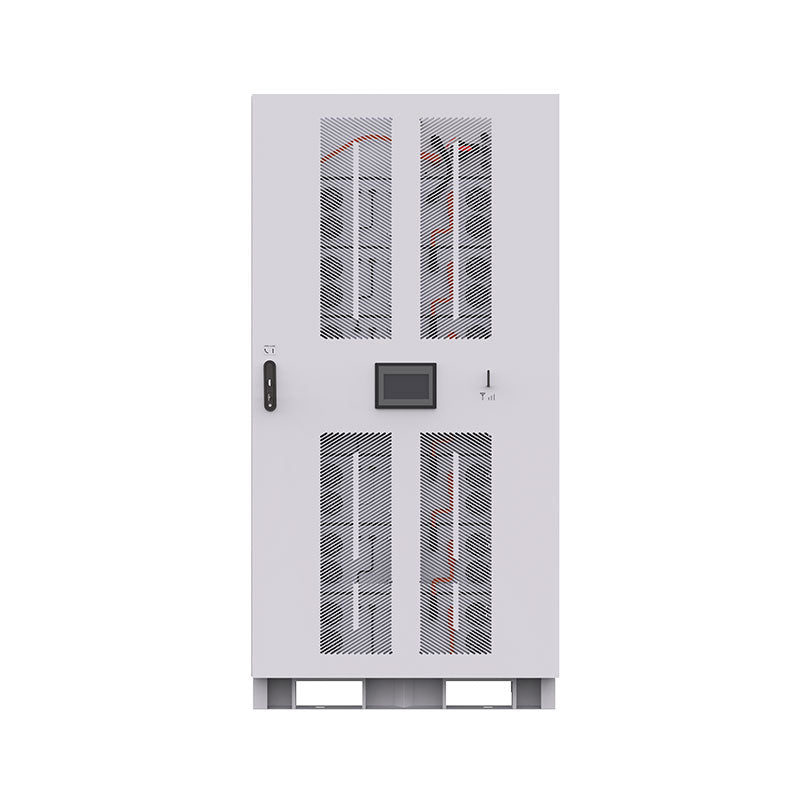


Remote energy storage systems face unprecedented cybersecurity challenges. With distributed energy resources becoming increasingly connected, selecting the right hybrid inverter with robust security features has become critical for system protection. Modern hybrid inverters serve as the digital gateway between your energy storage system and external networks, making their security architecture a fundamental consideration.

Understanding Hybrid Inverter Security Architecture
The security foundation of any hybrid inverter begins with its communication protocols and access control mechanisms. According to IRENA's Grid Codes for Renewable Powered Systems, "wherever power hardware is accessible through remote supervision and control interfaces, it is important that the corresponding communication software is sufficiently secure to prevent unauthorised access."
Communication Protocol Security
Secure hybrid inverters implement multiple layers of communication protection. The most robust systems support encrypted protocols such as TLS 1.3 for web-based interfaces and secure variants of Modbus TCP with authentication. In China, systems must comply with DL/T 634.5.104 standards, which require information security protection measures for low voltage DER communication.
Key communication security features to evaluate include:
- End-to-end encryption for all data transmission
- Certificate-based authentication for device identity verification
- Secure tunneling protocols for remote access
- Network segmentation capabilities to isolate critical functions
Authentication and Access Control
Multi-factor authentication represents the first line of defense against unauthorized access. Leading hybrid inverters now incorporate role-based access control (RBAC) systems that limit user privileges based on operational requirements. This approach significantly reduces the attack surface by ensuring users only access functions necessary for their specific roles.
Firmware Security and Update Management
Firmware vulnerabilities pose significant risks to remote ESS installations. IRENA emphasizes that "updating the software at any time to close newly identified security holes must be possible; otherwise, both programming errors and malicious interference become additional vulnerabilities to power system security and reliability."
Secure Boot and Code Integrity
Modern secure hybrid inverters implement hardware-based security features including secure boot processes that verify firmware authenticity before execution. This prevents malicious code injection during system startup. Additionally, code signing mechanisms ensure only authorized firmware updates can be installed.
Critical firmware security features include:
- Cryptographic signature verification for all firmware updates
- Rollback protection to prevent downgrade attacks
- Secure storage of cryptographic keys in hardware security modules
- Automated vulnerability scanning and patch management
Over-the-Air Update Security
Remote firmware updates require sophisticated security measures. The update process should utilize encrypted channels with mutual authentication between the inverter and update server. Failed update recovery mechanisms ensure system availability even if updates are interrupted or corrupted.
Network Security and Monitoring Capabilities
Network security extends beyond the inverter itself to encompass the entire communication infrastructure. Secure hybrid inverters provide comprehensive network monitoring and intrusion detection capabilities to identify potential threats in real-time.
Network Isolation and Segmentation
Effective network segmentation isolates critical control functions from general network traffic. Virtual LAN (VLAN) support allows administrators to create separate network segments for different operational functions, reducing the potential impact of security breaches.
| Security Feature | Basic Inverters | Secure Hybrid Inverters |
|---|---|---|
| Network Encryption | Optional/Basic | Mandatory AES-256 |
| Authentication | Password Only | Multi-factor + Certificates |
| Firmware Updates | Manual/Unverified | Automated + Signed |
| Intrusion Detection | None | Real-time Monitoring |
Threat Detection and Response
Advanced hybrid inverters incorporate behavioral analysis engines that establish baseline operational patterns and detect anomalies indicating potential security incidents. These systems can automatically implement protective measures such as network isolation or system shutdown when threats are detected.
Compliance and Certification Requirements
Regulatory compliance plays a crucial role in hybrid inverter selection for remote ESS monitoring. Different regions have specific cybersecurity requirements that must be met for legal operation and insurance coverage.
International Standards Compliance
Key standards to consider include IEC 62443 for industrial cybersecurity, which provides a comprehensive framework for securing industrial automation and control systems. The standard defines security levels (SL1-SL4) that correspond to different threat scenarios and protection requirements.
Essential certifications include:
- IEC 62443-4-2 for component security requirements
- UL 2089 for cybersecurity standards in distributed energy resources
- NERC CIP compliance for utility-scale installations
- Regional standards such as China's DL/T 634.5.104
Documentation and Audit Trail
Secure hybrid inverters maintain comprehensive audit logs of all system activities, configuration changes, and security events. These logs are essential for forensic analysis following security incidents and for demonstrating compliance with regulatory requirements.
Practical Selection Criteria and Implementation
Selecting the right secure hybrid inverter requires careful evaluation of both technical specifications and operational requirements. The decision should balance security features with system performance, cost considerations, and long-term maintainability.
Vendor Security Assessment
Evaluate potential vendors based on their security development lifecycle practices, incident response capabilities, and track record for security updates. Vendors should provide clear documentation of their security architecture and vulnerability disclosure processes.
Key vendor evaluation criteria:
- Security testing and penetration testing practices
- Response time for critical security patches
- Third-party security certifications and audits
- Transparency in vulnerability disclosure
Deployment Best Practices
Proper deployment significantly impacts the security effectiveness of hybrid inverters. Network configuration, access control policies, and monitoring procedures must be carefully planned and implemented. Regular security assessments ensure ongoing protection against evolving threats.
Implementation considerations include network topology design, backup communication paths, and integration with existing security infrastructure. Staff training on security procedures and incident response protocols ensures human factors don't compromise technical security measures.
Future-Proofing Your Investment
The cybersecurity landscape continues evolving rapidly, making future-proofing capabilities essential for long-term system security. IRENA notes that "cybersecurity has already become one of the most critical factors for the security of electricity supply today and will become even more important in the future."
Secure hybrid inverters should support emerging security technologies such as quantum-resistant cryptography, AI-powered threat detection, and blockchain-based device authentication. Modular security architectures allow for security capability upgrades without complete system replacement.
Investment in secure hybrid inverters with comprehensive remote monitoring capabilities protects your energy storage system against current and future cybersecurity threats. The additional cost of security features is minimal compared to the potential impact of successful cyberattacks on critical energy infrastructure.
