













LiFePO4 batteries are known for safety, stability, and long service life, but their lifespan is not automatic. Depth of discharge, temperature, charge rate, storage state of charge, and BMS quality all shape how many useful cycles the battery delivers.
The best way to extend LiFePO4 battery life is to reduce unnecessary stress while still using enough capacity to meet your energy needs.
Understanding Depth of Discharge (DoD)
Depth of Discharge, or DoD, is the percentage of battery capacity used before recharging. If a 100Ah battery delivers 50Ah before it is recharged, that cycle is about 50% DoD.
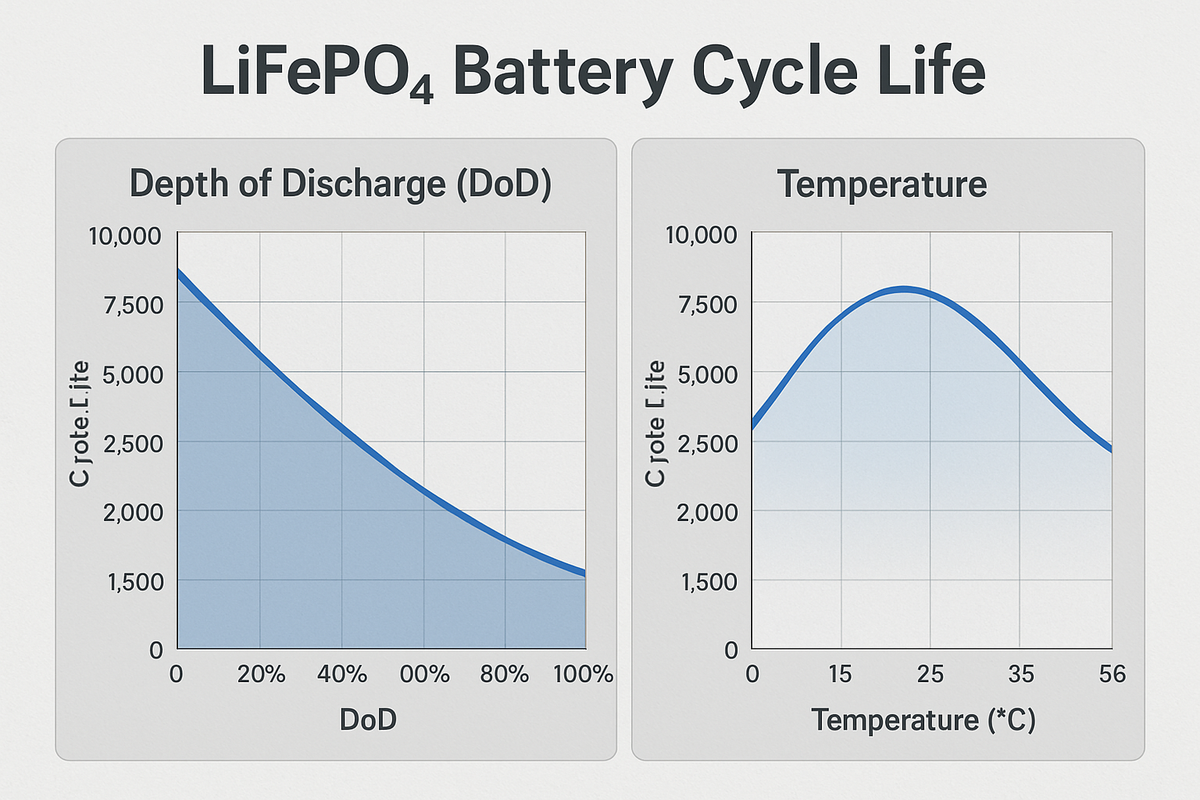
The Direct Link Between DoD and Cycle Life
Deeper discharge generally creates more stress than shallow cycling. This does not mean deep discharge must never happen; it means frequent deep discharge usually shortens total cycle life compared with moderate daily cycling.
| Depth of Discharge | Battery Stress | Typical Use Guidance |
|---|---|---|
| 30% to 50% | Lower | Best when you have enough capacity and want long lifespan. |
| 70% to 80% | Moderate | Common balance for solar storage and RV systems. |
| Near 100% | Higher | Useful occasionally, but not ideal as a daily target. |
Practical Application: Setting Your DoD for Longevity
For many solar storage systems, operating around 80% DoD or less is a practical balance between usable capacity and lifespan. If you frequently reach the BMS low-voltage cutoff, the battery bank is probably undersized for the load. This Depth of Discharge guide explains the relationship in more detail.
The Critical Role of Temperature
Temperature is one of the strongest external factors affecting LiFePO4 battery life. Heat accelerates aging, while cold reduces performance and makes charging more restrictive.
The Ideal Operating Temperature Range
Most LiFePO4 batteries perform best in moderate temperatures. Always check the battery manual, but a cool, stable installation location is generally better than a hot, sealed compartment or direct sunlight.
How High Temperatures Degrade Battery Health
High heat speeds up chemical reactions that consume active lithium and increase internal resistance. Over time, this reduces usable capacity and power delivery. Battery degradation research from the National Renewable Energy Laboratory shows why temperature is a key variable in predicting battery aging.
- Capacity loss: The battery stores less energy over time.
- Higher internal resistance: Voltage sag becomes more noticeable under load.
- Faster self-discharge: Stored batteries lose charge more quickly in heat.
The Impact of Low Temperatures
Cold weather reduces usable capacity and charge acceptance. Standard LiFePO4 charging below 0°C (32°F) is generally not recommended unless the battery includes approved low-temperature charging protection or self-heating. See this LiFePO4 temperature range guide for seasonal operating guidance.
The Combined Effect: DoD and Temperature Interaction
DoD and temperature compound each other. A deep discharge in a hot compartment is more stressful than a shallow cycle in a moderate environment. Likewise, charging in cold conditions can be risky even if the battery is otherwise lightly used.
Balancing Performance and Lifespan
Maximum lifespan does not always mean minimum use. A battery that is never used may still age over time. The practical target is balanced use: enough capacity to avoid constant deep discharge, enough ventilation to avoid heat buildup, and correct charge settings to avoid BMS intervention.
Strategies for Managing DoD and Temperature
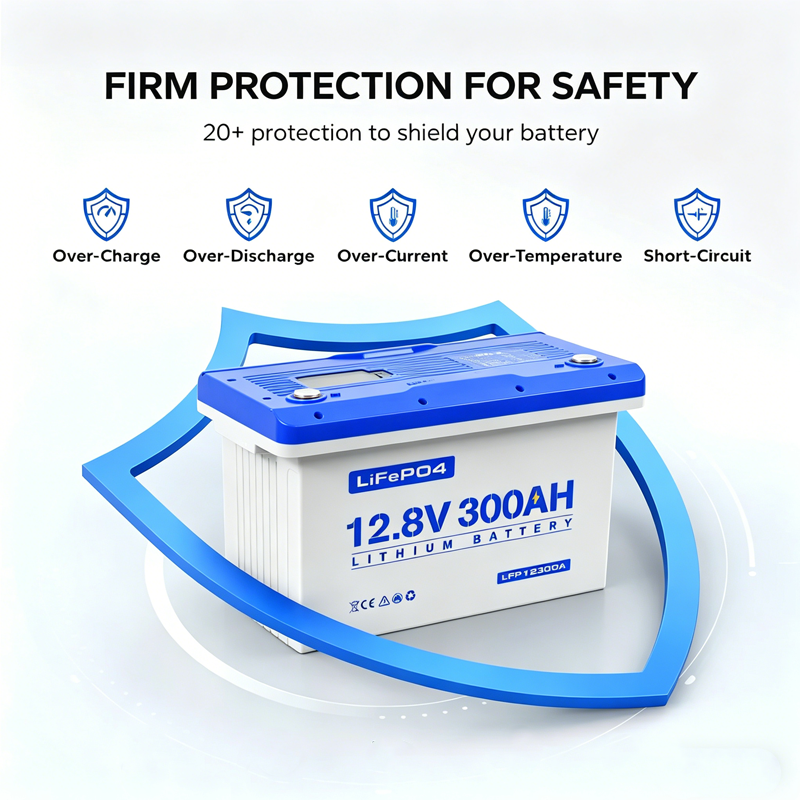
- Use a quality BMS: It should protect against over-discharge, over-current, and unsafe temperature.
- Install in a stable location: Avoid direct sun, sealed hot compartments, and freezing charge conditions.
- Size the battery bank realistically: More capacity reduces daily DoD for the same load.
- Use correct charger settings: Avoid lead-acid profiles, equalization, and unsuitable float behavior.
- Monitor seasonal changes: Winter capacity and summer heat both change system behavior.
Final Thoughts
LiFePO4 batteries are resilient, but their lifespan depends on real operating conditions. The strongest everyday habits are simple: avoid routine deep discharge, keep the battery out of excessive heat, do not charge below freezing without proper protection, and use compatible charging equipment.
For a wider view of capacity, efficiency, and cycle life, this solar storage performance reference explains how these metrics affect system value.
Frequently Asked Questions
What is the best DoD for a LiFePO4 battery?
For daily use, many systems balance lifespan and usable capacity around 70% to 80% DoD or less. Shallower cycling can extend cycle life, but the best target depends on your load and battery size.
Can LiFePO4 batteries be used in freezing temperatures?
They can often discharge below freezing with reduced capacity, depending on the model. Standard charging below 0°C (32°F) should be avoided unless the battery has low-temperature charging protection or self-heating.
How much does temperature affect LiFePO4 battery life?
Temperature can have a major effect. Heat accelerates aging and capacity loss. Cold reduces available power and creates charging restrictions. Keeping batteries in a moderate environment is one of the easiest ways to protect lifespan.
