












Hot spots are silent threats to the efficiency and lifespan of your solar panels. These localized areas of high temperature can degrade performance and even lead to permanent damage. Fast and accurate detection is crucial to protect your investment. This text compares two popular diagnostic tools—the thermal camera and the infrared (IR) gun—to help you select the right instrument for rapid PV hot-spot diagnosis.
Understanding Hot Spots in Solar Panels
A hot spot is more than just a warm area on a panel; it's a symptom of an underlying problem that can compromise your entire solar energy system. Identifying them early preserves the health and output of your array.
What Causes PV Hot Spots?
Hot spots arise when a solar cell's energy production is restricted, causing it to dissipate energy as heat instead of converting sunlight into electricity. Common causes include:
- Partial Shading: A leaf, bird dropping, or shadow covering even a small part of a cell can trigger this effect.
- Manufacturing Defects: Imperfections in the silicon wafer or poor electrical contacts can create resistance.
- Micro-Cracks: Tiny, often invisible cracks from shipping, handling, or environmental stress can disrupt the flow of current.
- Cell Mismatch: If cells within a panel have slightly different electrical characteristics, the weaker cell can be forced into a reverse bias state, generating heat.
Why Early Detection is Critical
Ignoring a hot spot leads to compounding problems. Initially, it reduces the power output of the affected panel and, consequently, the entire string. Over time, the sustained high temperature can accelerate the degradation of the panel's encapsulant and backsheet, potentially leading to moisture ingress or even a fire hazard. Prompt diagnosis protects your hardware and ensures your system delivers the expected return on investment.
The Tools of the Trade: IR Gun vs. Thermal Camera
Both IR guns and thermal cameras measure infrared radiation to determine temperature, but they do so in fundamentally different ways. Their differences directly impact the speed and reliability of PV diagnostics.
The Infrared (IR) Thermometer Gun: A Point-and-Shoot Solution
An infrared thermometer, or IR gun, measures the temperature of a single, small spot. You aim the laser at a target and get an instant temperature reading. While simple and affordable, this method is highly limited for inspecting solar arrays. You could easily miss a critical hot spot by measuring just a few centimeters away from it, making the process slow and prone to error.
The Thermal Imaging Camera: Seeing the Bigger Picture
A thermal imaging camera captures thousands of temperature points simultaneously and presents them as a visual heat map, called a thermogram. This allows you to see the temperature distribution across an entire solar panel or array in a single glance. It instantly reveals anomalies and provides the visual context needed to understand the problem's scope, making it a far superior tool for comprehensive diagnostics.
Key Differences Summarized
The choice between these tools depends on the required level of detail and diagnostic speed.
| Feature | IR Thermometer Gun | Thermal Imaging Camera |
|---|---|---|
| Area of Measurement | Single Point | Full Area (Thousands of Points) |
| Speed of Diagnosis | Slow and methodical | Extremely fast |
| Accuracy in Locating Hot Spots | Low; easy to miss the exact spot | High; pinpoints the issue visually |
| Contextual Data | None (just a number) | Rich visual heat map |
| Cost | Low | Moderate to High |
| Best Use Case | Quick temperature verification of a known point | Comprehensive array inspection and fault finding |
Practical Application: How to Diagnose PV Hot Spots Effectively
The right technique is as important as the right tool. For reliable results, inspections should be conducted under clear, sunny skies with high solar irradiance to create maximum thermal contrast.
Using an IR Gun for Basic Checks
If an IR gun is your only option, you must be systematic. Scan each panel in a grid pattern, taking multiple readings from different cells. Compare the temperature of any suspected hot spot to adjacent cells. A difference greater than 20°C often signals a significant issue. This process is time-consuming and offers no guarantee you will find the true peak temperature.
Leveraging a Thermal Camera for Professional Diagnostics
A thermal camera streamlines the entire process. From a single vantage point, you can scan multiple panels at once. Hot spots appear as distinct, bright areas that are impossible to miss. This allows you to immediately identify the affected panel and the specific cells that are overheating. The visual evidence captured by a thermal camera is also invaluable for documentation and warranty claims, providing clear proof of the defect.
Beyond Detection: Linking Diagnostics to System Performance
Identifying a hot spot is the first step. Understanding its impact on your entire energy ecosystem, especially your storage, is what truly matters for achieving energy independence.
How Hot Spots Impact Your Energy Storage
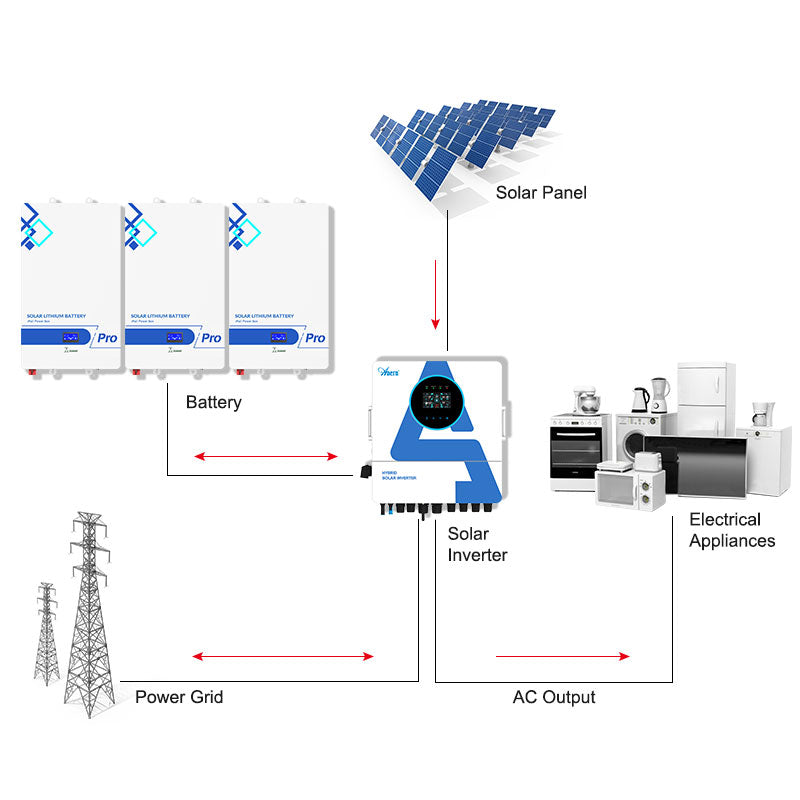
A compromised solar panel produces less power, which reduces the output of its entire string due to the 'weakest link' effect. This directly curtails the amount of energy available to charge your battery system. Consistent solar generation is fundamental for achieving optimal storage performance. As detailed in our guide on solar storage performance, underperforming panels directly limit your ability to store energy for nighttime use or grid outages.
The Financial Case for Better Tools
The initial cost of a thermal camera may seem high, but it is an investment in asset protection. The financial loss from a single undiagnosed panel—through reduced energy production and potential replacement costs—can easily exceed the price of the tool. As the International Energy Agency noted in its Getting Wind and Solar onto the Grid report, concentrated issues can create 'hotspots' that magnify challenges. While the report discusses grid-scale infrastructure, the principle holds true for individual PV systems: a single faulty component can jeopardize the health of the entire operation.
Making the Right Choice for Your Needs
Ultimately, the goal is to maintain your solar array at peak performance. An IR gun can serve as a basic verification tool, but it lacks the speed and certainty required for proper diagnostics. For anyone serious about the long-term health, safety, and output of their solar energy system, a thermal camera is the correct professional choice. It provides the speed, accuracy, and comprehensive data needed to find and fix problems quickly, ensuring your path to energy independence remains clear.
Frequently Asked Questions
What is a significant temperature difference for a hot spot?
A temperature difference of 20°C (36°F) or more between a cell and the surrounding cells is generally considered a significant indicator of a hot spot that requires investigation.
Can I use these tools at night?
No. Hot spot diagnosis relies on the panel being active under solar load. The sun's energy causes the faulty cell to heat up. Inspections should be done on a clear, sunny day, ideally around solar noon, for the best results.
Is a more expensive thermal camera always better?
Not necessarily for this application. While higher-resolution cameras provide more detail, a basic entry-level thermal camera is often sufficient for identifying PV hot spots. Key features to look for are adequate thermal sensitivity and a clear display, rather than just the highest resolution.
Does the angle of measurement matter?
Yes, for both tools. For best accuracy, you should measure as close to perpendicular to the panel surface as possible. Measuring at a sharp angle can lead to inaccurate readings due to reflections and emissivity effects.
