
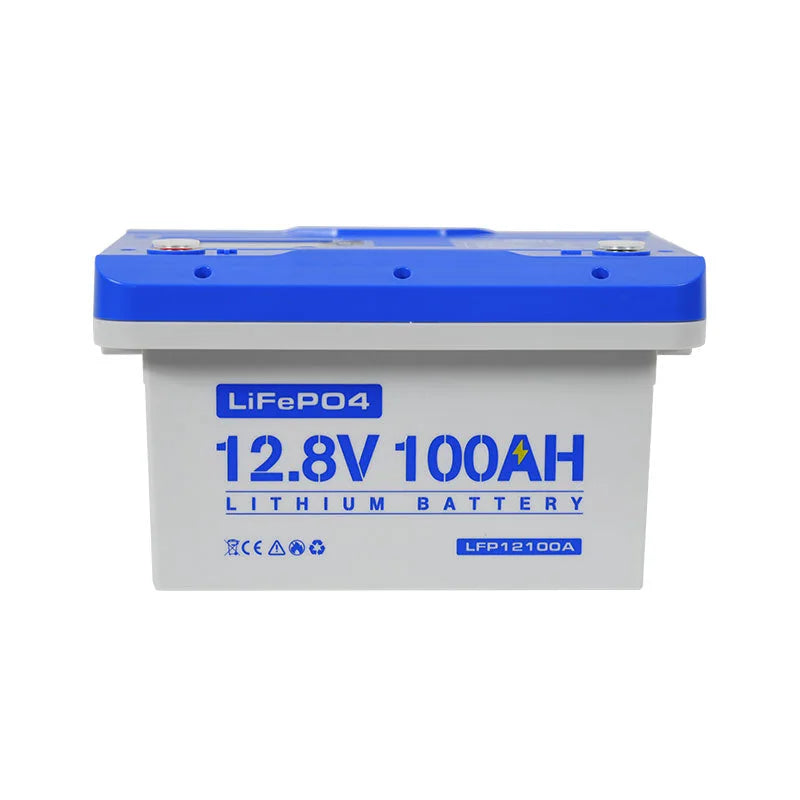
 LiFePO4 Battery
100Ah 12V LiFePO4 Deep Cycle Battery
The 100Ah 12V LiFePO4 Deep Cycle Battery (1280Wh) is a compact and efficient lithium energy storage solution designed for solar power systems, RVs, marine applications, and back…
View productReliable 12 Volt lithium iron phosphate batteries for deep-cycle and off-grid power, with 100Ah, 200Ah and 300Ah options for compact energy systems.
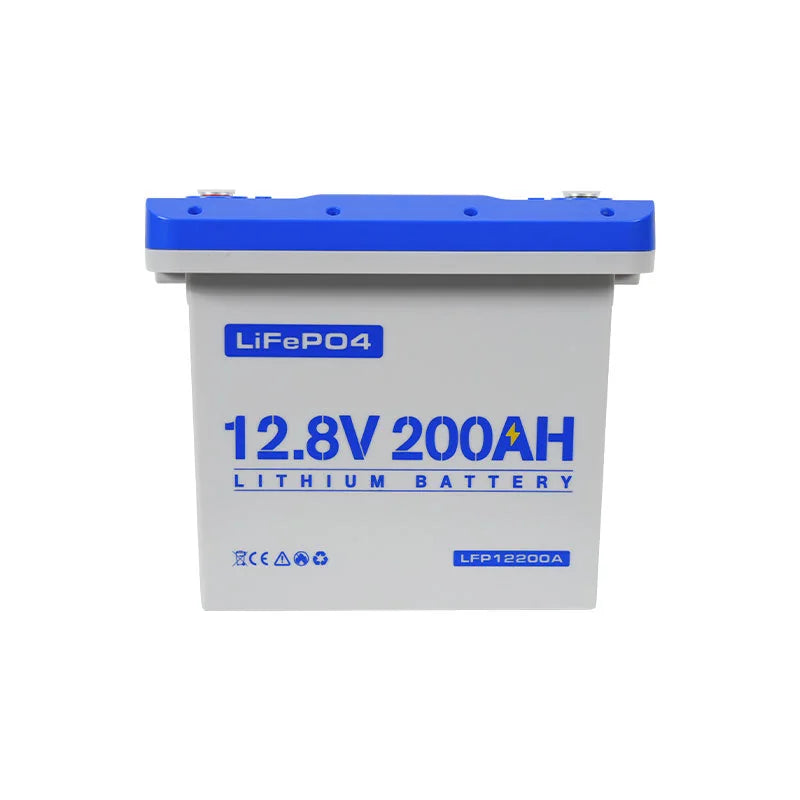
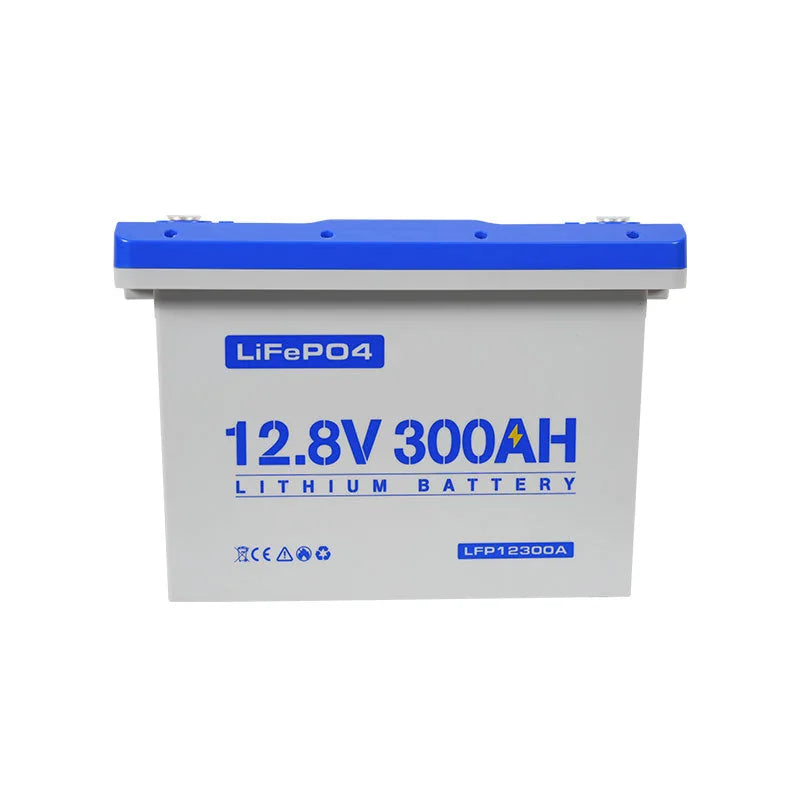
Compare compact 12V-class products by capacity and expected load profile.
LiFePO4 Battery
The 100Ah 12V LiFePO4 Deep Cycle Battery (1280Wh) is a compact and efficient lithium energy storage solution designed for solar power systems, RVs, marine applications, and back…
View product
LiFePO4 Battery
The 12.8V 200Ah 2560Wh LiFePO4 Lithium Battery is a high-performance deep cycle battery designed for solar power systems, off-grid energy storage, RVs, marine applications, and…
View product
LiFePO4 Battery
The 12V 300Ah LiFePO4 Battery (3840Wh) is a high-capacity deep cycle lithium battery engineered for reliable and long-lasting energy storage. Built with advanced Lithium Iron Ph…
View product
A 12V LiFePO4 battery is a rechargeable lithium iron phosphate battery for electrical systems operating around the 12-volt nominal range. A typical pack uses four 3.2V cells in series, producing a nominal voltage of approximately 12.8V.
This voltage class fits compact solar, portable power, backup and DC-load systems where low-voltage equipment is already part of the design.
Amp-hour capacity determines nominal energy and should be sized against load power, runtime and usable depth of discharge.
Compact DC loads, portable systems and short-duration backup.
Medium off-grid loads, longer runtime and larger solar support.
Higher-energy 12V architectures where a 12V bus must be retained.
Nominal energy is voltage × amp-hours. Actual usable energy depends on product limits, inverter losses, temperature and reserve settings.
LiFePO4 changes more than battery chemistry; the charge profile and system settings must also be checked.
| Factor | 12V LiFePO4 | Lead-acid |
|---|---|---|
| Nominal voltage | Typically 12.8V | Typically 12V |
| Cycle use | Designed for repeated deep cycling | Depth of discharge often more limited |
| Weight | Generally lower for equivalent usable energy | Generally heavier |
| Charge control | Lithium-compatible settings required | Lead-acid charging profile |
| Battery management | Integrated BMS | Varies by type |
Do not assume drop-in compatibility; verify the charger, inverter, alternator or controller before replacement.
12V batteries are best suited to compact low-voltage systems with controlled current and a lithium-compatible charging source.
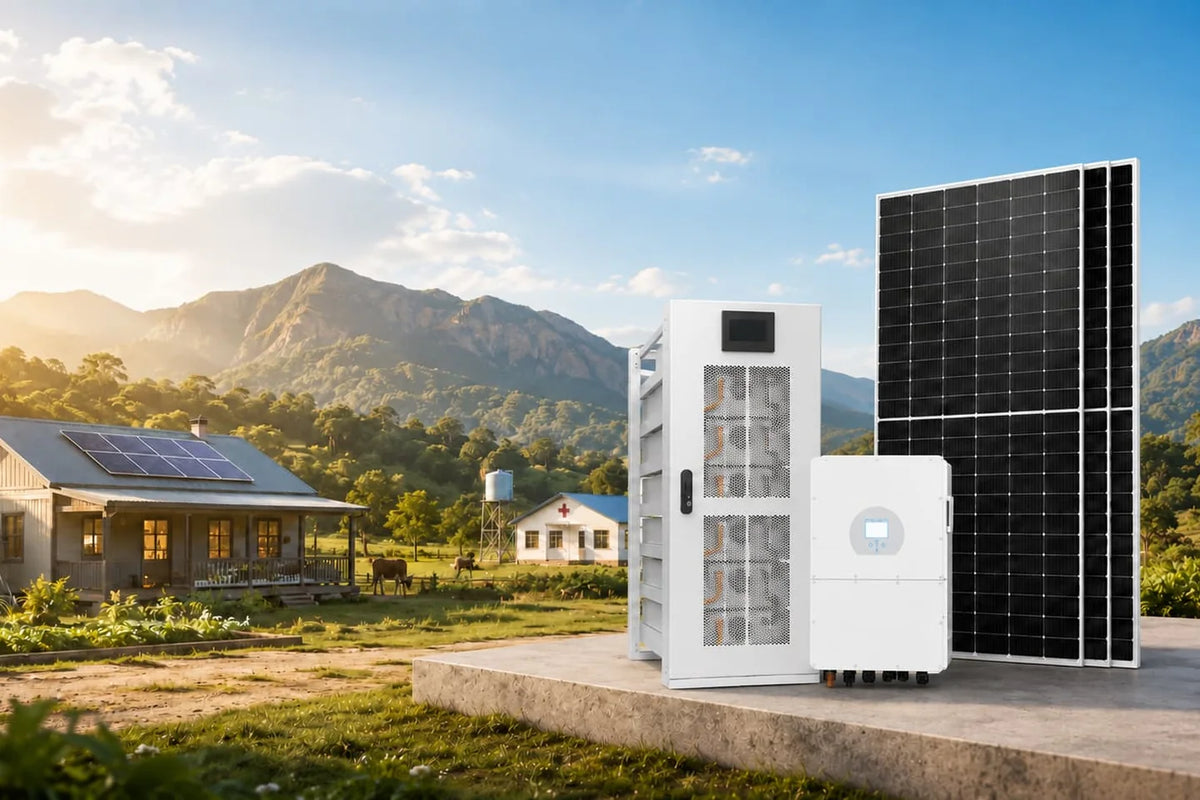
Battery storage for compact cabins, lighting, communications and essential DC loads.
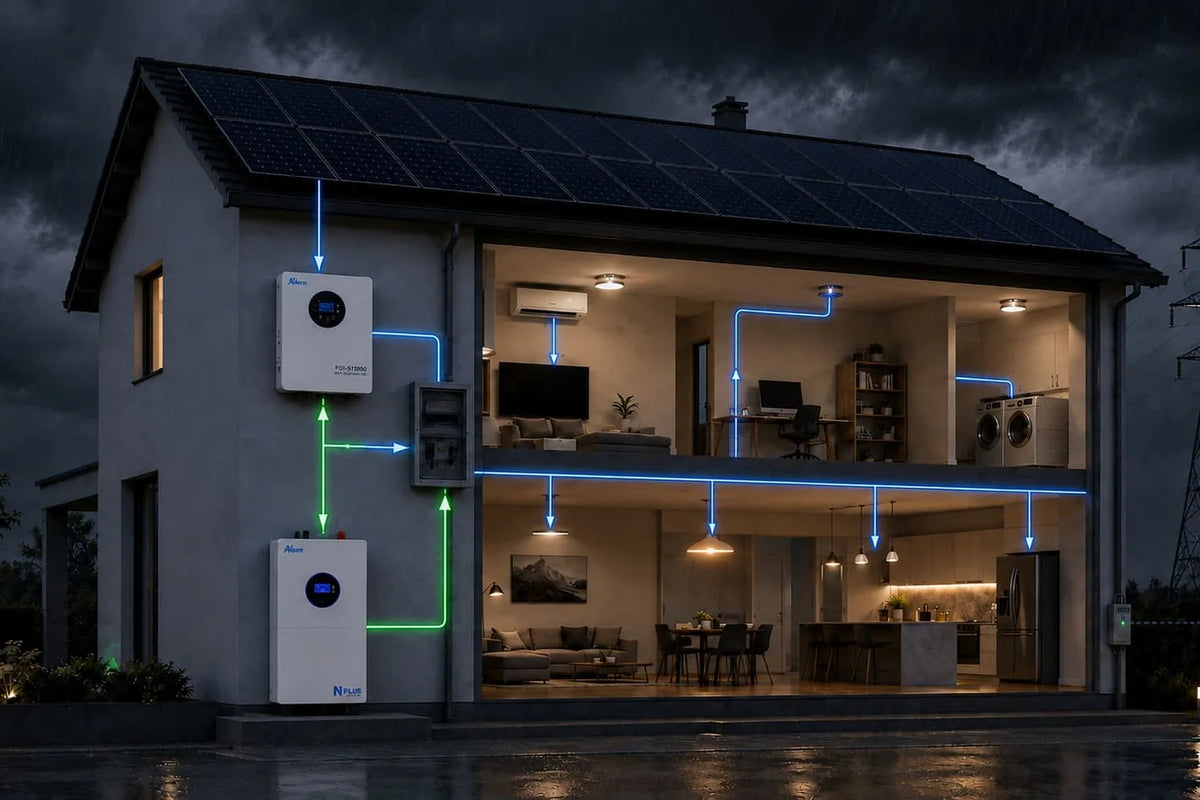
Targeted backup for low-voltage devices and essential small loads.
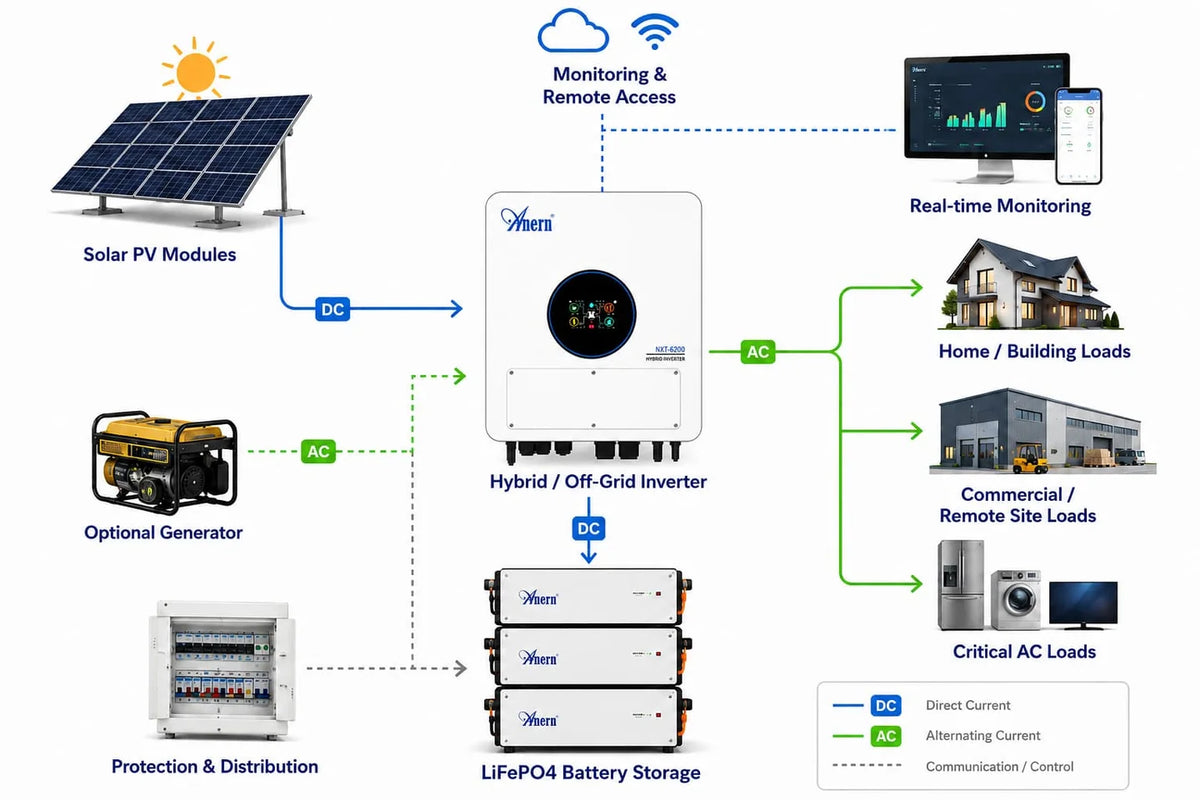
Use where the electrical architecture, mounting and charging environment are specifically designed for lithium batteries.
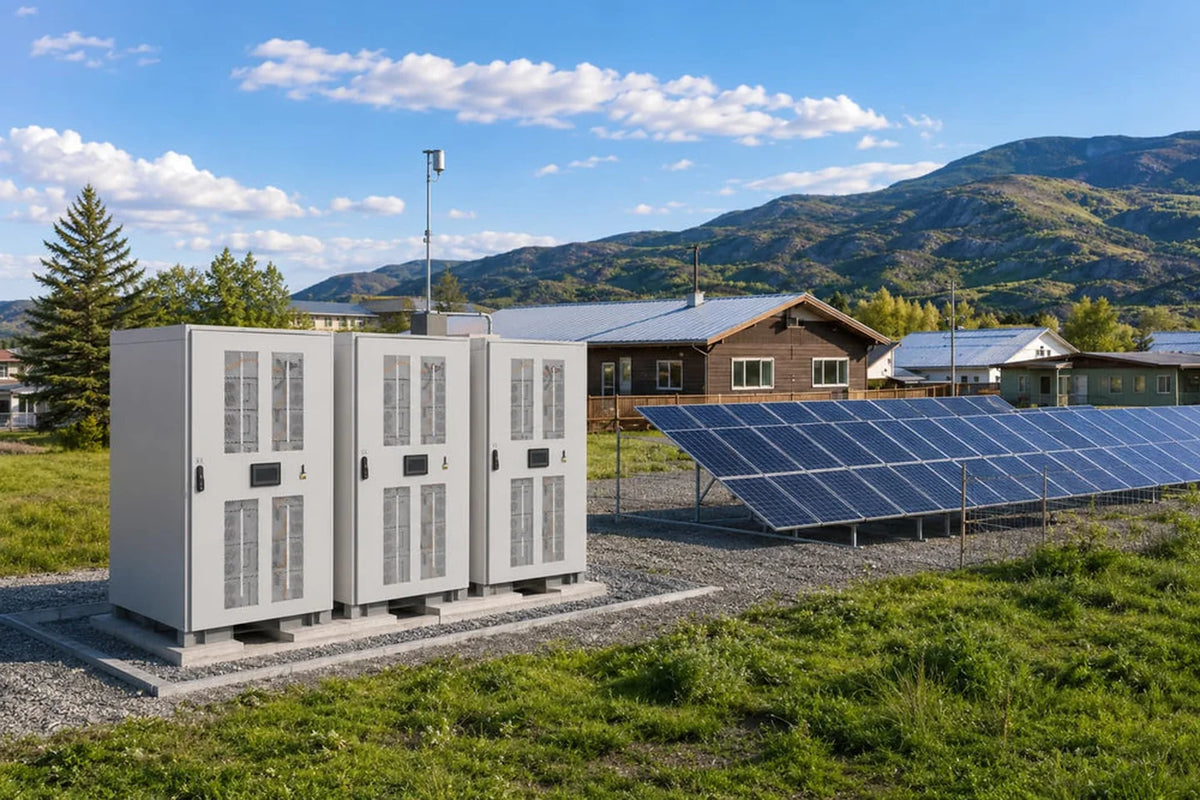
Power for monitoring, communications and field equipment with appropriate enclosure protection.
Only use matched units and a connection method explicitly approved for the selected battery model.
Parallel connection keeps nominal voltage near 12.8V while increasing amp-hour capacity.
Series connection increases system voltage. Confirm that the battery model and BMS support series operation.
Combined banks require balanced strings, matched batteries, correct protection and an approved architecture.
Check the electrical limits and charging method before installation.
Confirm that the inverter or DC equipment accepts the battery's full operating voltage range.
Use a charger or controller with settings approved for the selected LiFePO4 model.
A 12V system carries high current at larger power levels; size cables, fuses and terminals accordingly.
Keep continuous and surge loads within the battery's specified charge and discharge current.
Verify whether series, parallel or both are supported for the exact model.
Select voltage from the DC architecture, inverter operating range and load current—not from energy capacity alone.
| Voltage class | Typical scale | Common fit | Design note |
|---|---|---|---|
| 12V / 12.8V | Small DC loads | Portable, compact and low-power systems | Higher current at equal power |
| 24V / 25.6V | Medium DC loads | Off-grid homes and mid-size backup | Lower current than 12V |
| 48V / 51.2V | Solar ESS | Home storage, telecom and larger systems | Efficient for higher-power loads |
Final selection must be checked against the exact battery, inverter, charger, cable and protection specifications.
Capacity, pack current and charging architecture should align with the buyer's product or installation responsibility.
Compact off-grid and backup systems requiring lithium-compatible charging and clear DC protection.
A 100Ah–300Ah range for different runtime and channel requirements.
Low-voltage power platforms that need defined current limits and mechanical integration.
Remote or backup applications with known loads, autonomy and environmental conditions.
A typical four-cell LiFePO4 pack has a nominal voltage of about 12.8V. Its actual voltage changes during charging and discharging.
Calculate daily watt-hours, required backup time, maximum load current and allowed reserve. Larger Ah capacity increases nominal energy but does not change the 12V-class system voltage.
It may be possible after confirming charger settings, inverter voltage range, alternator or controller behavior, current limits, wiring and enclosure requirements.
Only when the exact product supports the intended method. Use matched model, age and state-of-charge, plus correct cabling and protection.
Use a 12V-class inverter whose DC range, continuous and surge current, low-voltage cutoff and charging settings match the battery datasheet.
Share the system voltage, daily energy demand, inverter model, installation environment and required backup duration for a project-based recommendation.